
The midday meal is where good eating intentions go to be tested. Breakfast happens at home, dinner can be cooked, but lunch arrives in the middle of work, errands and hunger — exactly when the nearest option is whatever the nearest shop sells. For vegans the squeeze is tighter: the grabbed option is often the sad option, a plain salad or a hummus wrap for the fourth day running — and the protein, fibre and sheer satisfaction a proper lunch should deliver quietly go missing. Meal prep solves it by moving the decision to Sunday, when time and good intentions are both available. Done well, it is not five identical boxes of rice and sadness — it is a small system of components that combine into varied lunches all week. This guide explains how to meal prep vegan lunches: what to cook, how to store it, and how to keep Wednesday’s lunch as appealing as Monday’s.
The Component Method: Prep Ingredients, Not Meals
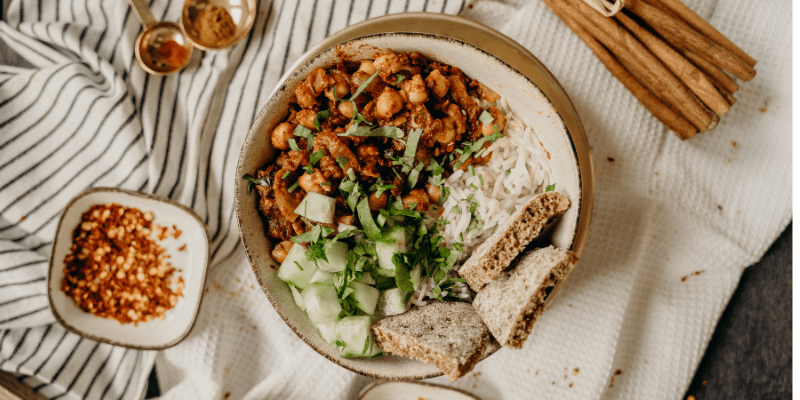
The mistake that kills meal prep is prepping finished meals. By day three, a fully assembled dish has steamed in its own moisture, flavours have merged into one flavour, and eating it feels like a duty. Prep components instead — a Sunday session of about ninety minutes producing building blocks: two grains (say quinoa and brown rice, or couscous for speed), two proteins (a tray of roasted chickpeas and a batch of marinated baked tofu or tempeh), one big sauce and one dressing, a tray of roasted vegetables, and raw crunchy vegetables chopped and stored dry. Across the week those blocks combine differently each day — grain bowl Monday, wrap Tuesday, noodle-style bowl Wednesday with a soy-ginger dressing — so the eater tastes variety while the cook worked once. The protein planning follows the framework in our guide to how to get enough protein on a vegan diet: a legume or soy component at every lunch, backed by grains and seeds, keeps the day’s total where it should be without a single calculation at the desk.
The Sunday Session, in Order
Sequence matters because the oven and the hob should never sit idle. Start the grains first — they cook unattended. Get the oven working next: chickpeas and cubed tofu or tempeh on separate trays (different cooking times, same heat), plus a tray of sturdy vegetables — sweet potato, broccoli, peppers, red onion — tossed in oil and spices. While everything cooks, blend the sauce and dressing (a tahini-lemon and a peanut-lime cover most of the week), wash and chop the raw vegetables, and cook a pot of lentils on the hob if a soup or a lentil salad is on the week’s plan. Finish by portioning: grains and proteins into their containers, sauces in small jars, raw vegetables in a container lined with a dry cloth or paper towel to hold crispness. Ninety minutes, one wash-up, five days handled. Put music or a podcast on, work in the order above, and the session becomes the calmest cooking of the week rather than a chore fitted around it. Write the week’s combinations on a note — Monday bowl, Tuesday wrap — because the future hungry self should never have to think.
Storage Rules That Keep Food Safe and Tasty
Meal prep lives or dies on storage, and the rules are few and firm. Cool food promptly — within two hours of cooking — and refrigerate at a genuinely cold setting; cooked grains and legumes keep three to four days, which is why many preppers cook for Monday to Wednesday and do a small Thursday top-up cook, or freeze two days’ portions on Sunday and thaw them midweek. Keep components separate: dressings and sauces in their own jars, crunchy things away from wet things, avocado and dressed leaves added on the day. Glass containers reheat evenly and don’t hold odours; whatever you use, label with the day it was cooked — memory is not a food-safety system. Reheat thoroughly where the lunch is hot, and respect the fridge-life rule without negotiation: when in doubt, throw it out is cheaper than the alternative. Frozen components are the system’s spare capacity — grains, cooked legumes, soups and sauces all freeze well for a month or more, turning a missed Sunday from a crisis into a freezer raid.
Keeping It Interesting Past Week Two
The second-week slump is real: the system works, the flavours repeat, the takeaway starts whispering. Rotate by theme rather than by effort — a Mediterranean week (hummus, falafel-style chickpeas, tabbouleh grains, olives, tahini), a Mexican week (black beans, corn, peppers, lime rice, salsa and guacamole on the day), an East Asian week (edamame, sesame noodles, pickled vegetables, peanut sauce). One new sauce recipe a week refreshes old components. Keep an emergency shelf — good instant noodles, a jar of curry paste, frozen dumplings — for the week the session never happened, because a system with a graceful fallback survives; a system demanding perfection gets abandoned. And notice what the prep buys beyond lunch: the same components answer weeknight dinners, the grocery bill shrinks because the list is written from the plan, and the midday question — what am I eating? — disappears. That disappearance, more than any single recipe, is the real product of the Sunday ninety minutes.
The Bottom Line
How to meal prep vegan lunches: spend ninety minutes on Sunday cooking components — two grains, two proteins, a sauce, a dressing, roasted and raw vegetables — rather than finished meals; store everything separately and cold, respect the three-to-four-day fridge rule with freezing as backup, and assemble a different combination each day. Start smaller than the full system if ninety minutes feels like a lot: one grain, one protein, one sauce and one roasted tray already covers three good lunches, and a partial system you actually run beats the complete one you keep postponing. Add components as the habit settles. Rotate themes weekly to keep it interesting, and the midday meal stops being a daily negotiation and becomes the easiest healthy habit you own.
