
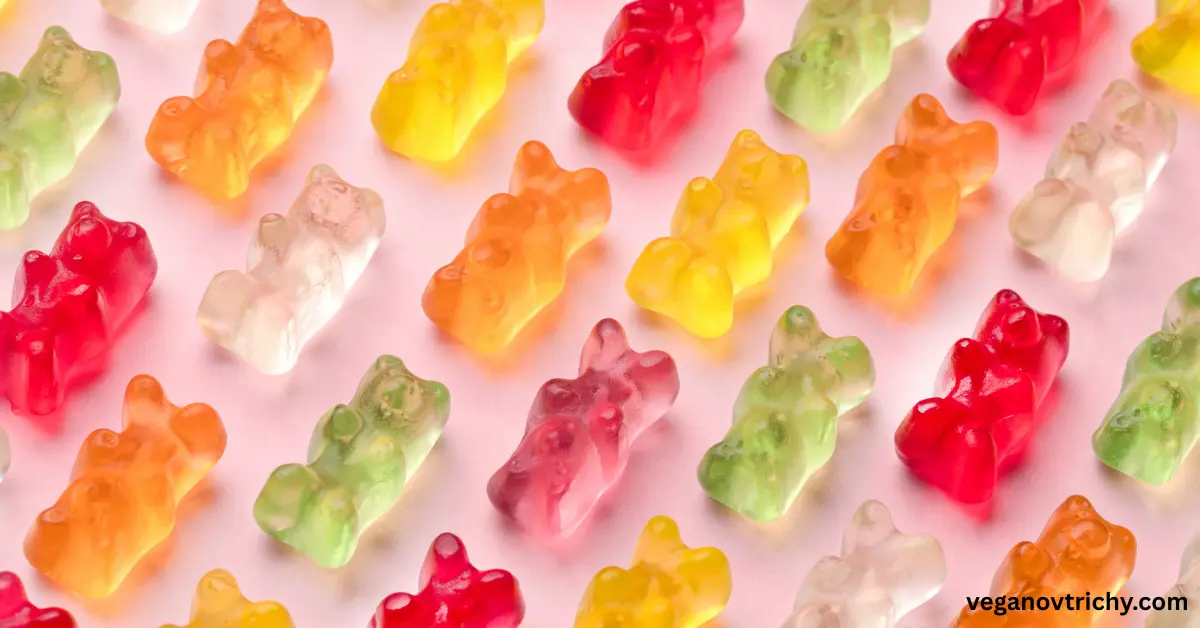
Vegan gummies are chewy candies or gummy-style products made without animal-derived ingredients such as gelatin, beeswax, carmine, or shellac. Instead of traditional gelatin, they commonly use plant-based gelling ingredients such as pectin, agar-agar, starch, or carrageenan.
That simple difference matters because ordinary gummies are not automatically vegan. Many traditional gummy bears, gummy worms, fruit chews, and similar sweets get their familiar chewy texture from gelatin.
Fortunately, plant-based alternatives have improved considerably. Today, vegan gummies can offer fruity flavors, bright colors, sour coatings, and satisfying textures without relying on animal-derived gelatin.
However, seeing the words “gelatin-free” on a package does not always mean the product is completely vegan. Other ingredients, including certain colors and glazing agents, can also come from animal or insect sources.
This guide explains what vegan gummies are, what they are made from, which ingredients to avoid, how they differ from regular gummies, how to read a gummy label, and how to choose the right product.
What Are Vegan Gummies?
Vegan gummies are gummy-style foods made without ingredients derived from animals.
Traditional gummies often contain gelatin to create their characteristic soft and elastic texture. Vegan products replace gelatin with plant-derived or otherwise vegan-friendly gelling ingredients.
Common alternatives include:
- Pectin
- Agar-agar
- Corn or other food starches
- Tapioca starch
- Carrageenan
Pectin is especially common. It is naturally present in plant material and is commonly obtained from fruits such as apples and citrus fruits.
But the gelling ingredient is only one part of the formula.
A genuinely vegan gummy should also avoid other non-vegan ingredients that can sometimes appear in confectionery, including carmine, beeswax, shellac, dairy ingredients, and honey.
Therefore, the easiest rule to remember is:
Gelatin-free is a good starting point, but you still need to check the complete ingredient list.
Are Gummies Vegan?
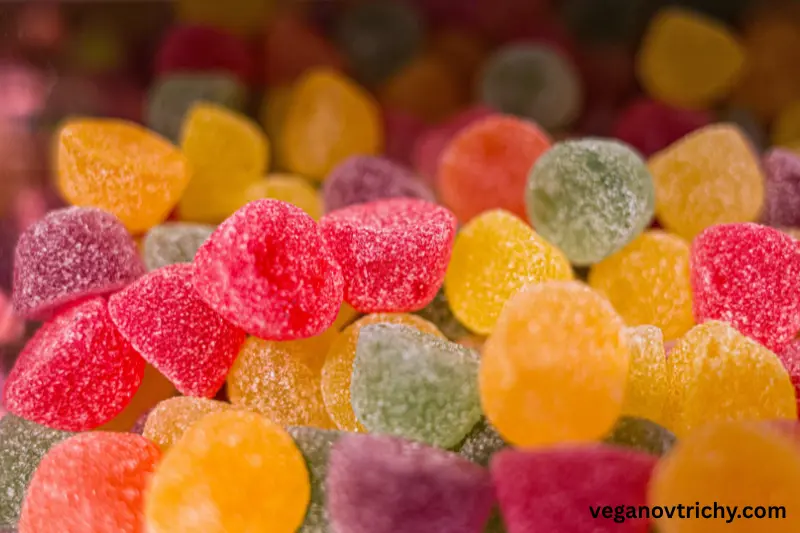
Some gummies are vegan, but many traditional gummies are not.
The main reason is gelatin.
Gelatin is an animal-derived protein used in many confectionery products because it produces the stretchy, elastic texture associated with traditional gummy candy.
If gelatin appears in the ingredient list, the product is not vegan.
However, gummies made with pectin, agar, starch, or another plant-based gelling system may be suitable for vegans when all the other ingredients are vegan as well.
Quick Vegan Gummy Checklist
When checking a package, look for:
Good signs:
- Clearly labeled “vegan”
- Plant-based certification
- Pectin
- Agar-agar
- Corn starch
- Tapioca starch
- Carrageenan
- Carnauba wax
- Fruit or vegetable colors
Ingredients that require caution or should be avoided in a vegan product:
- Gelatin
- Carmine or cochineal
- Beeswax
- Shellac or confectioner’s glaze
- Milk or whey
- Honey
Reading beyond the main gelling agent is important because a gelatin-free gummy can still contain another animal-derived ingredient.
What Are Vegan Gummies Made Of?
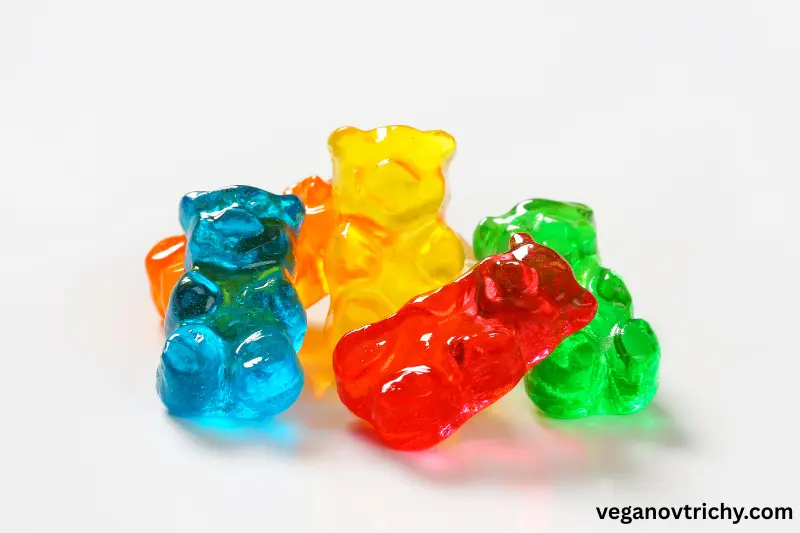
There is no single recipe used for every vegan gummy.
Manufacturers combine different sweeteners, gelling ingredients, acids, flavors, colors, oils, and coatings to achieve the desired flavor and texture.
A typical vegan gummy may contain some combination of:
- Sugar
- Glucose or tapioca syrup
- Fruit juice
- Fruit concentrate
- Pectin or starch
- Citric acid
- Malic acid
- Natural or artificial flavors
- Plant-derived colors
- Vegetable oil
- Carnauba wax
The exact ingredients vary considerably between products.
This is why two vegan gummy brands can have completely different textures even when both are gelatin-free.
Pectin: One of the Most Common Vegan Alternatives to Gelatin
Pectin is one of the most important ingredients to understand when shopping for vegan gummies.
It is a naturally occurring substance found in plant cell walls and is particularly associated with fruits such as apples and citrus fruits.
Food manufacturers use pectin because it can form a gel under appropriate conditions.
This makes it useful for:
- Jams
- Jellies
- Fruit preparations
- Confectionery
- Vegan gummies
Pectin gummies usually do not behave exactly like gelatin gummies.
They may have a cleaner and shorter bite, rather than the highly elastic texture associated with gelatin.
That difference is not necessarily good or bad. It is simply a different style of gummy.
Agar-Agar Gummies
Agar-agar is another gelatin alternative.
It comes from red algae and has long been used as a gelling ingredient in food preparation.
Agar can produce a fairly firm gel. Because of this, homemade agar gummies often have a different texture from commercial gummy bears.
They may feel more like a firm fruit jelly than an extremely stretchy gummy.
Agar is particularly useful for homemade recipes because it can be relatively straightforward to work with when the correct amount of liquid is used.
Starch-Based Gummies
Starch can also provide structure and chewiness.
Manufacturers may use:
- Corn starch
- Modified food starch
- Potato starch
- Tapioca starch
Starch-based candies can offer a pleasant chewy texture without animal gelatin.
However, anyone with food allergies or specific dietary requirements should still check the complete package information rather than assuming that a vegan product is automatically suitable for every diet.
Carrageenan
Carrageenan is obtained from red seaweed and is used as a thickener, stabilizer, and gelling ingredient in various foods.
Some gummy manufacturers combine carrageenan with other ingredients to create a desired texture.
Like pectin and agar, it provides manufacturers with another way to produce gelatin-free confectionery.
Vegan Gummies vs. Regular Gummies
The biggest difference between vegan and conventional gummies is usually the ingredient responsible for creating the gel.
| Feature | Vegan Gummies | Traditional Gummies |
|---|---|---|
| Main gelling agent | Pectin, agar, starch or carrageenan | Often gelatin |
| Animal gelatin | No | Frequently |
| Texture | Can be soft, firm or clean-breaking | Often elastic and bouncy |
| Vegan-friendly | Yes, when all ingredients qualify | Usually not when gelatin is present |
| Colors | Often plant or synthetic alternatives | May vary |
| Glazing agents | Plant-based options can be used | May include beeswax or shellac |
The difference is therefore much larger than simply changing one word on the package.
Creating a successful plant-based gummy requires manufacturers to balance texture, moisture, sweetness, acidity, and stability without relying on gelatin.
Why Is Gelatin Not Vegan?
Gelatin comes from animal collagen.
For that reason, it does not fit a vegan diet.
It has traditionally been popular in gummy candy because it creates a flexible gel that melts pleasantly in the mouth.
Plant-based gummies have to achieve a similar eating experience using different ingredients.
Pectin, starch, agar, and carrageenan can all contribute to gummy structure, although they behave differently from gelatin.
Hidden Non-Vegan Ingredients in Gummies
Gelatin gets most of the attention, but it is not the only ingredient worth checking.
1. Carmine
Carmine is a red coloring derived from cochineal insects.
It may also appear under names such as:
- Cochineal
- Cochineal extract
- Carminic acid
- E120
It is not considered vegan.
Manufacturers can instead create red, pink, or purple shades using ingredients such as beetroot, fruit concentrates, vegetable extracts, or other suitable colorants.
2. Beeswax
Beeswax may be used as a coating or glazing ingredient.
Vegans generally avoid bee-derived ingredients, including beeswax.
A common plant-based alternative is carnauba wax, which comes from the leaves of the carnauba palm.
3. Shellac
Shellac can be used to give confectionery a shiny surface.
You may see related wording such as:
- Confectioner’s glaze
- E904
- Resinous glaze
Because shellac is insect-derived, it is not vegan.
4. Dairy Ingredients
Some specialty gummies may contain dairy ingredients.
Watch for terms including:
- Milk
- Whey
- Lactose
- Cream
- Milk powder
This is especially important with creamy, filled, yogurt-style, or dessert-inspired gummy products.
5. Honey
Honey may occasionally be used as a sweetener.
Although it is less common than sugar or glucose syrup in ordinary gummy candy, it is still worth checking.
Does Gelatin-Free Mean Vegan?
Not necessarily.
This is one of the most useful distinctions for shoppers to understand.
A product can contain no gelatin but still contain:
- Beeswax
- Shellac
- Carmine
- Milk ingredients
- Honey
Therefore:
Gelatin-free means there is no gelatin. Vegan means the entire product should contain no animal-derived ingredients.
If you want the simplest shopping experience, look for products clearly identified as vegan and still review the ingredient list when necessary.
Are Pectin Gummies Vegan?
Pectin itself is plant-derived and is commonly used in vegan foods.
Therefore, seeing pectin instead of gelatin is a strong positive sign.
However, a pectin gummy is not automatically vegan.
You still need to check the remaining ingredients.
For example, a hypothetical pectin gummy could still use beeswax as a coating or carmine as a coloring.
Think of pectin as answering one question:
“What is creating the gel?”
It does not answer:
“Is every ingredient in this product vegan?”
Do Vegan Gummies Taste Different?
They can, but the difference depends heavily on the recipe.
Older gelatin-free candies sometimes had a reputation for unusual textures. Modern food formulation gives manufacturers many more options.
A good vegan gummy can be:
- Soft
- Chewy
- Firm
- Juicy
- Sour
- Sugar-coated
- Fruit-forward
The main difference is often texture rather than flavor.
Gelatin produces an elastic chew. Pectin generally creates a shorter, cleaner bite, while agar can create a firmer gel.
Starch-based candies can fall somewhere else on the texture spectrum depending on their formulation.
Flavor ultimately depends more on the complete recipe than on whether gelatin is present.
Types of Vegan Gummies
“Vegan gummies” describes a broad category rather than one particular candy.
Vegan Gummy Bears
These are plant-based versions of traditional gummy bears.
They typically replace gelatin with pectin or starch.
Vegan Gummy Worms
Gummy worms can also be made without gelatin.
Sour varieties may include an acidic coating made with ingredients such as citric or malic acid.
Vegan Fruit Gummies
Fruit gummies may contain fruit juice, puree, or concentrates.
However, fruit imagery on the package does not prove that a product is vegan. The ingredient list remains more important than the flavor or package design.
Sour Vegan Gummies
Sour gummies combine a plant-based gummy base with acidic ingredients that produce a tart flavor.
The vegan status still depends on the complete formulation.
Vegan Gummy Vitamins and Supplements
Some vitamin and nutrient supplements are available in gummy form and use pectin instead of gelatin.
These products require an additional level of label checking.
The gummy base may be vegan while a particular nutrient can have different possible sources. For example, vitamin D3 can be produced from different source materials, so products specifically marketed and certified as vegan can make verification easier.
Supplements should also be treated as supplements rather than candy. Follow the labeled serving directions and keep them stored securely.
Vegan Gummies vs. Vegetarian Gummies
These terms are sometimes treated as interchangeable, but they do not always mean exactly the same thing.
A vegetarian product may exclude meat-derived gelatin while still containing ingredients such as dairy, honey, or beeswax depending on the manufacturer’s definition and the type of vegetarian diet.
Vegan standards are generally stricter because vegan products exclude animal-derived ingredients.
Therefore, someone following a vegan diet should look specifically for vegan, not simply vegetarian.
Are Vegan Gummies Healthier?
Not automatically.
“Vegan” describes how a product fits a plant-based lifestyle. It does not mean the food is nutritionally superior.
Vegan gummy candy can still contain significant amounts of:
- Sugar
- Syrups
- Acids
- Flavorings
- Colorings
It is better to evaluate nutrition separately from vegan status.
For example, when comparing two vegan candies, you can look at:
- Serving size
- Added sugars
- Total carbohydrates
- Ingredient list
- Portion size
A candy can be completely vegan while still being intended primarily as an occasional sweet treat.
Are Vegan Gummies Sugar-Free?
Some are, but most are not automatically sugar-free.
Vegan and sugar-free describe two completely different characteristics.
A gummy can be:
- Vegan and sweetened with sugar
- Vegan and sugar-free
- Non-vegan and sugar-free
- Non-vegan and sugar-sweetened
Never assume one claim guarantees the other.
Check the nutrition panel and ingredient list if sugar content matters to you.
Are Vegan Gummies Gluten-Free?
Again, not automatically.
Vegan means the product avoids animal-derived ingredients.
Gluten-free means it meets a separate requirement regarding gluten.
Some vegan gummies may also be gluten-free, while others may contain ingredients derived from wheat or may have cross-contact considerations.
People who medically need to avoid gluten should rely on appropriate gluten-free labeling and allergen information rather than the vegan logo alone.
Are Vegan Gummies Dairy-Free?
A genuinely vegan product should not intentionally contain dairy ingredients.
However, allergy considerations are different from vegan dietary preferences.
Some vegan products may be manufactured in facilities or on equipment that also handles milk.
Someone with a milk allergy should therefore check allergen statements and manufacturer information instead of relying solely on a vegan claim.
Vegan Does Not Automatically Mean Allergy-Free
This distinction is important.
A vegan gummy may still contain or come into contact with:
- Wheat
- Soy
- Peanuts
- Tree nuts
- Other allergens
Similarly, an allergen-free product is not necessarily vegan.
Always evaluate dietary preference and allergy safety separately.
How to Tell If Gummies Are Vegan
You do not need to understand every food additive to make a good initial assessment.
Use this simple process.
Step 1: Look for a Vegan Label
Start with the front and back of the package.
A clear vegan statement or recognized vegan certification can make identification easier.
Step 2: Check for Gelatin
Read the ingredient list.
If gelatin is listed, the product is not vegan.
Step 3: Identify the Gelling Ingredient
Look for plant-based alternatives such as:
- Pectin
- Agar
- Starch
- Carrageenan
Finding one of these instead of gelatin is a positive sign.
Step 4: Check the Colors
Look for carmine, cochineal, carminic acid, or E120.
These indicate an insect-derived color.
Step 5: Check the Coating
Watch for beeswax and shellac/confectioner’s glaze.
Plant-based products may use alternatives such as carnauba wax or vegetable oils.
Step 6: Look for Dairy and Honey
Check for milk, whey, lactose, cream, honey, and similar ingredients.
Step 7: Check Manufacturer Information When Necessary
Sometimes an ingredient’s source is not obvious from the package.
If strict vegan verification matters and the label is unclear, check the manufacturer’s current product information or contact the manufacturer.
Recipes can change, so an old online ingredient list should not override the package you are actually buying.
A Simple Label Example
Imagine a gummy with this simplified ingredient list:
Sugar, glucose syrup, pectin, fruit juice concentrate, citric acid, natural flavor, vegetable oil, carnauba wax.
There is no obvious gelatin, beeswax, shellac, carmine, dairy, or honey in that simplified example.
Now compare it with:
Sugar, glucose syrup, gelatin, citric acid, flavor, carmine, beeswax.
That second example contains multiple ingredients that would make it unsuitable for vegans.
This illustrates why ingredient reading is more reliable than judging a gummy by its color, flavor, or appearance.
What Makes a Good Vegan Gummy?
The best choice depends on what you want from the product.
Ingredient Transparency
A clear ingredient list is one of the strongest positive signs.
You should be able to understand what creates the gummy texture and, ideally, where potentially questionable ingredients come from.
Vegan Verification
Clear vegan labeling reduces uncertainty.
Third-party certification can provide additional reassurance when ingredient sourcing is difficult to determine from the label alone.
Texture
Some people want an extremely chewy gummy, while others prefer a softer fruit-jelly texture.
Pectin, agar, and starch produce different results.
Trying different formulations is often the easiest way to discover your preference.
Flavor
Look for flavors you actually enjoy rather than choosing solely because a product is plant-based.
Vegan gummies are available in many profiles, including:
- Berry
- Citrus
- Apple
- Peach
- Tropical fruit
- Mixed fruit
- Sour fruit
Sugar Content
Compare nutrition labels if this matters to you.
Instead of relying on marketing phrases, look at the actual serving size and amount of added sugar.
Dietary Requirements
If you also need gluten-free, nut-free, or another specific dietary characteristic, verify that separately.
Why Texture Varies Between Vegan Gummies
One of the most interesting differences between gummy products is texture.
Gelatin forms a protein-based network.
Plant-based gelling ingredients work differently.
Pectin needs carefully controlled conditions involving factors such as acidity, sugar, temperature, and moisture.
Agar behaves differently again and tends to create a firmer gel.
Starch systems can produce their own distinctive chew.
This explains why vegan gummies can range from soft fruit jellies to dense, chewy sweets.
The texture difference does not necessarily indicate poor quality. It may simply reflect the gelling technology used.
Why Acidity Matters
Acidity contributes to both flavor and gummy structure.
Ingredients such as citric acid and malic acid are common in confectionery.
They can provide:
- Tartness
- Flavor balance
- Sourness
- Support for certain pectin systems
This is one reason fruit-flavored gummies often combine sweetness with noticeable acidity.
Sour varieties simply push that balance further toward tartness.
Why Vegan Gummies Can Become Sticky
Gummies contain carefully controlled amounts of moisture and sugar.
Heat and humidity can affect their texture.
Depending on the formulation, gummies exposed to poor storage conditions may:
- Stick together
- Become unusually soft
- Lose their ideal surface texture
- Change shape
Always follow the storage directions on the package.
As a general rule, gummies benefit from being kept sealed and protected from excessive heat and moisture.
How to Store Vegan Gummies
Commercial products should be stored according to the manufacturer’s instructions.
Generally, you should:
- Keep the package properly sealed.
- Avoid prolonged exposure to direct sunlight.
- Protect gummies from excessive heat.
- Avoid humid storage areas.
- Use them before the stated best-before or expiration date.
Homemade gummies can have very different storage requirements because they may not contain the same ingredients or undergo the same manufacturing process as commercial candy.
Follow the recipe’s specific storage instructions.
Can You Make Vegan Gummies at Home?
Yes.
Homemade versions commonly use fruit juice combined with a vegan gelling ingredient such as agar or pectin.
However, homemade gummies may not have exactly the same texture as commercial candy.
Commercial gummy manufacturing carefully controls:
- Temperature
- Solids concentration
- Acidity
- Moisture
- Drying
- Gelling conditions
This makes the familiar packaged-candy texture difficult to reproduce perfectly in a home kitchen.
A simple homemade fruit gummy may therefore taste delicious while feeling more like a firm fruit jelly.
Pectin vs. Agar for Homemade Vegan Gummies
Both can work, but they produce different results.
Pectin
Pectin can create a more candy-like texture when the recipe carefully controls sugar, acidity, temperature, and concentration.
It can be more technically demanding.
Agar
Agar is convenient for simple homemade recipes and sets firmly.
However, the final texture may be less elastic than traditional gummy candy.
For beginners, the most important advice is to follow a tested recipe designed specifically for the chosen gelling ingredient.
Do not simply replace gelatin with the same quantity of agar or pectin in an ordinary gummy recipe. These ingredients behave differently.
Common Mistakes When Buying Vegan Gummies
Assuming All Fruit Gummies Are Vegan
Fruit flavor does not determine vegan status.
A strawberry gummy can still contain gelatin.
Checking Only for Gelatin
Gelatin is important, but it is not the whole story.
Remember carmine, beeswax, shellac, dairy, and honey.
Assuming “Natural” Means Vegan
“Natural” and “vegan” are different claims.
A naturally derived ingredient can still come from an animal source.
Assuming Vegan Means Healthy
Vegan candy is still candy.
Evaluate nutrition based on the actual nutrition label.
Assuming Vegan Means Gluten-Free
These are separate dietary characteristics.
Check both labels when both matter.
Trusting Old Ingredient Lists
Food formulations can change.
The most current package information should be your primary reference.
Vegan Gummies for Different Needs
Different shoppers have different priorities.
If your main goal is avoiding gelatin, check the gelling agent first.
If you follow a strict vegan diet, examine colors, coatings, sweeteners, and other ingredients as well.
If you have food allergies, check allergen information separately.
If you are monitoring sugar intake, compare the nutrition panel rather than assuming plant-based candy contains less sugar.
If you prefer certain textures, look at whether the product uses pectin, agar, or starch.
A good product is one that meets your actual dietary requirements rather than simply carrying the most attractive marketing claims.
Frequently Asked Questions About Vegan Gummies
Are vegan gummies actually vegan?
They should be when they are specifically formulated and labeled as vegan. Vegan gummies avoid animal-derived ingredients such as gelatin, carmine, beeswax, and shellac. Because formulations can change, checking the current package ingredient list remains a sensible habit.
What replaces gelatin in vegan gummies?
Common alternatives include pectin, agar-agar, starch, and carrageenan. Pectin is particularly popular in commercial plant-based gummies because it can create a pleasant confectionery texture when properly formulated.
Is pectin vegan?
Pectin is plant-derived and commonly obtained from materials such as citrus peel and apples. It is widely used as a vegan alternative to gelatin. However, the presence of pectin does not prove that every other ingredient in a gummy is vegan.
Are all gelatin-free gummies vegan?
No. Gelatin-free products may still contain ingredients such as beeswax, shellac, carmine, dairy, or honey. Check the complete ingredient list or look for reliable vegan labeling.
Are vegan gummies healthier than normal gummies?
Not necessarily. Vegan describes ingredient sourcing, not overall nutritional quality. Vegan candy can still contain substantial sugar and should be evaluated using its nutrition information and serving size.
Are vegan gummies gluten-free?
Some are, but vegan does not automatically mean gluten-free. Check for a gluten-free statement and review allergen information if you need to avoid gluten.
Why are some red gummies not vegan?
Some red candies use carmine, also known as cochineal or E120. Carmine comes from insects and is therefore not vegan. Vegan products can use other suitable colorants, including fruit and vegetable-derived colors.
Why do vegan gummies have a different texture?
Traditional gummies often rely on gelatin for an elastic texture. Plant-based gummies use pectin, starch, agar, or carrageenan, which form gels differently. As a result, vegan gummies may have a softer, firmer, shorter, or less stretchy bite.
Can children eat vegan gummy candy?
Vegan gummy candy should be treated like other candy, with serving size, ingredients, allergies, and age-appropriate choking considerations taken into account. Gummy supplements are different from candy and should only be used according to their labeling and appropriate adult guidance.
How do I know whether a gummy is truly vegan?
Start by looking for a clear vegan statement or certification. Then check the ingredients for gelatin, carmine, beeswax, shellac, dairy, and honey. Look for alternatives such as pectin, agar, starch, carnauba wax, and plant-based colors. If sourcing remains unclear, verify it with the manufacturer.
Final Thoughts
Vegan gummies prove that chewy candy does not need animal-derived gelatin.
Modern plant-based formulations can use pectin, agar, starch, or carrageenan to create everything from soft fruit jellies to firm and chewy gummy bears.
But identifying a genuinely vegan gummy requires looking beyond gelatin.
Carmine, beeswax, shellac, dairy ingredients, and honey are other ingredients worth checking. That is why a gelatin-free claim alone should not automatically be treated as a vegan claim.
The easiest approach is simple: look for clear vegan labeling, read the complete ingredient list, understand the main gelling agent, and separately verify any allergy or nutritional requirements.
Once you know what to look for, choosing vegan gummies becomes much easier.
