
A ruby may appear to be a simple red gemstone at first glance, but its identity involves much more than colour. Its mineral composition, natural formation, internal characteristics, and treatment history all influence how it looks and how it is valued. For anyone planning to buy manik stone in Bangalore, understanding these details can make the selection process more informed and help distinguish a genuine gemstone from a misleading imitation.
Ruby has been admired across cultures for centuries, appearing in traditional jewellery, royal collections, and personal ornaments. Yet, every ruby has its own characteristics. Learning how to recognise these qualities helps buyers appreciate the stone beyond its appearance and make a more confident purchasing decision.
1. The Mineral Identity Behind A Ruby
Ruby belongs to the corundum mineral family, which is composed primarily of aluminium oxide. The same mineral family also includes sapphires, with colour distinguishing the two varieties. While sapphires occur in several colours, corundum is classified as ruby when it displays the characteristic red colour associated with this gemstone.
The red shade develops mainly because of trace amounts of chromium within the crystal structure. Depending on the concentration of chromium and the presence of other elements, a ruby can display anything from a lighter pinkish-red to a deep, saturated red.
This mineral identity is important because colour alone cannot establish authenticity. Other materials, including glass and certain synthetic stones, can imitate the appearance of ruby without sharing its natural mineral origin.
2. How Natural Rubies Develop Beneath The Earth
The formation of a natural ruby requires particular geological conditions. Over long periods, heat, pressure, and the availability of suitable minerals allow corundum crystals to develop within different rock environments.
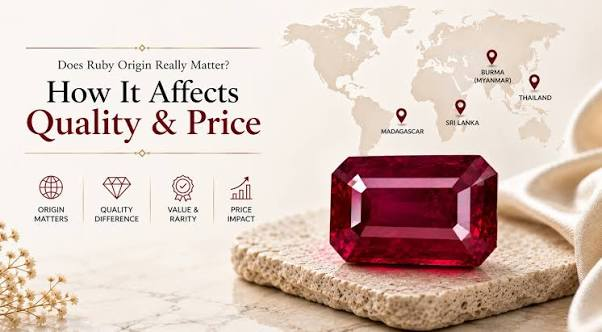
Rubies are found in several parts of the world, including Myanmar, Mozambique, Sri Lanka, Thailand, and Madagascar. Each source can produce stones with distinctive characteristics, although considerable variation exists among rubies from the same region.
Geological conditions influence crystal growth, colour distribution, transparency, and the inclusions that develop inside the stone. These internal features can provide gemologists with useful information about a ruby’s formation.
3. Reading The Different Shades Of Red
Colour is one of the first features people notice when examining a ruby. Nevertheless, the brightest or darkest stone is not automatically the most valuable. The overall appearance depends on the balance between hue, saturation, and tone.
Hue refers to the basic colour and any secondary shades, such as purple or orange. Saturation describes the strength or purity of the colour, while tone indicates how light or dark it appears. A well-balanced ruby often displays a strong red colour without appearing excessively dark or washed out. Its appearance should also be considered under different lighting conditions because artificial lights and daylight can influence how the colour is perceived.
When evaluating an original ruby gemstone, buyers should look beyond photographs and examine the stone in person whenever possible. Images can alter colour through lighting, editing, and screen settings, making direct inspection particularly useful.
4. Natural Inclusions And Their Meaning
Many natural rubies contain tiny internal features known as inclusions. These may appear as fine mineral crystals, delicate needle-like structures, small cavities, or subtle patterns within the gemstone.
Rather than automatically indicating poor quality, inclusions can help gemologists understand a stone’s internal structure and formation. Some inclusions are barely visible to the unaided eye, while others can affect transparency and overall appearance.
Natural inclusions are not conclusive proof of authenticity by themselves. Synthetic rubies can also contain internal features, and some natural stones may appear unusually clean. The pattern, type, and arrangement of inclusions must be interpreted alongside other gemological evidence.
5. Understanding Natural, Synthetic, And Imitation Rubies
These three categories are often confused, even though they describe different things.
A natural ruby forms through geological processes without being manufactured by people. A synthetic ruby is created in a laboratory but has essentially the same chemical composition and crystal structure as natural corundum. An imitation ruby, by comparison, uses another material to reproduce the gemstone’s appearance.
Glass imitations may look convincing in jewellery settings, while synthetic rubies can be difficult to distinguish from natural stones without suitable equipment. The difference between natural and synthetic material is particularly important when rarity and resale considerations influence a purchase.
A seller should clearly disclose whether a ruby is natural, laboratory-grown, or an imitation. Any treatment, such as heat treatment or fracture filling, should also be disclosed because it can affect appearance, durability, and value. Buyers seeking an original ruby gemstone should verify these details through reliable documentation before making a purchase.
6. Factors That Influence Ruby Quality
Ruby quality cannot be determined through a single characteristic. Gem professionals commonly assess colour, clarity, cut, and carat weight, while also considering treatments, origin evidence, and market demand.
Colour often has a substantial influence on value, but clarity affects how freely light passes through the stone. A well-executed cut can improve its visual appeal by balancing proportions, symmetry, and light return.
Carat weight measures the gemstone’s mass rather than its visible dimensions. Two rubies of equal weight may have different measurements because of variations in shape, depth, and cutting style.
7. Making A Careful Purchase In Bangalore
Bangalore offers buyers access to jewellery retailers and gemstone sellers, but the convenience of local shopping should not replace careful evaluation. Before making a purchase, examine the ruby under neutral lighting and ask to see it outside its jewellery setting if practical.
Check whether the seller provides a detailed description and written disclosure of treatments. Compare the quoted price with stones of similar quality rather than relying on broad claims about rarity or origin.
Anyone looking to buy manik stone in Bangalore should also understand the return policy before completing the transaction. A clear policy can be valuable if independent testing is required or the gemstone does not match its description.
Conclusion
Understanding the identity of a ruby means looking beyond its striking red appearance to consider its mineral composition, geological history, internal features, treatments, and verified quality. These details help buyers distinguish natural stones from synthetic or imitation alternatives while making more informed comparisons.
A thoughtful purchase begins with clear questions, realistic expectations, and reliable documentation. For those exploring gemstone options and seeking guidance on choosing Manik, RudraTree can be a starting point for learning more about ruby selection and making a considered decision.
