
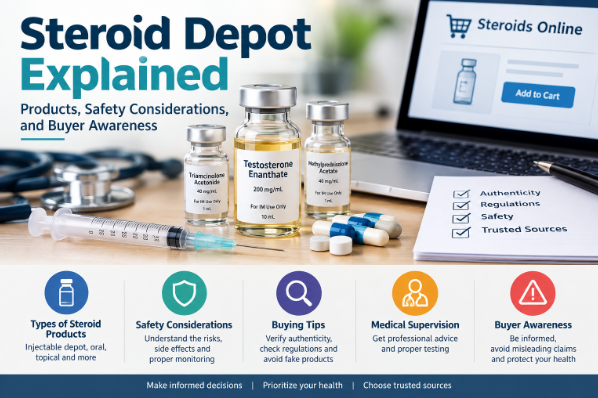
Understanding steroid products, their medical applications, and their potential risks is essential for anyone researching hormone-related treatments or performance-enhancing substances. The term Steroid depot commonly refers to injectable formulations designed to release a steroid medication gradually over time. These preparations are used in certain medical treatments, depending on the specific substance, formulation, and patient’s needs.
Interest in steroids has grown among athletes, bodybuilders, and individuals researching hormone health. However, the growing availability of products advertised through websites selling steroids online has also created concerns about product authenticity, misleading claims, and potential health complications.
Before considering a steroids purchase, consumers should understand the differences between medically prescribed treatments and nonmedical performance-enhancing products. Learning about formulation types, safety considerations, regulatory requirements, and reliable medical guidance can help individuals make more informed decisions while avoiding unnecessary risks.
What Is a Steroid Depot?
A steroid depot is a formulation designed to release a medication gradually after administration. In many injectable preparations, the active ingredient is formulated as an ester or combined with a carrier that affects how quickly the medication becomes available in the body.
Unlike some medications that are absorbed relatively quickly, depot formulations may provide a prolonged release. The duration depends on the particular medication, its chemical properties, the formulation, and individual physiological factors.
Depot formulations exist in different areas of medicine. Certain corticosteroid preparations are used to manage specific inflammatory conditions, while some injectable testosterone preparations are prescribed for patients with medically diagnosed testosterone deficiency.
It is important to recognize that corticosteroids and anabolic-androgenic steroids are different categories of medication. Corticosteroids are primarily associated with reducing inflammation and modifying immune responses, whereas anabolic-androgenic steroids act on androgen receptors and influence muscle development and other biological functions.
Understanding this distinction is essential when researching steroid products or evaluating information provided by online sellers.
Common Types of Steroid Products
Steroid medications are available in several formulations, and their uses depend on the active ingredient and medical indication.
1. Injectable Depot Formulations
Injectable depot medications are designed to release an active substance over an extended period. Certain testosterone formulations are examples of long-acting injectable medicines used under medical supervision.
Their potential advantages include less frequent administration compared with some shorter-acting formulations. However, the appropriate interval, dose, and monitoring requirements vary by product and patient.
Injectable preparations can also carry risks, including injection-site reactions, infection, and complications associated with inappropriate administration.
2. Oral Steroid Medications
Oral steroids are taken by mouth and include several medications with different medical purposes. Some corticosteroids are prescribed for inflammatory or autoimmune conditions, while anabolic-androgenic steroids may be used in specific clinical circumstances.
Oral anabolic steroids can cause significant adverse effects, including liver injury, unfavorable cholesterol changes, and suppression of natural hormone production. Their risks depend on the specific substance, dose, duration, and individual health factors.
3. Topical Steroid Products
Topical corticosteroids are applied to the skin to treat certain inflammatory skin conditions. They are available in different strengths and formulations, and selecting an appropriate product depends on the condition, affected body area, and treatment duration.
These medications should not be confused with injectable anabolic steroids because their purposes, routes of administration, and risk profiles differ substantially.
Understanding Steroids Online and Product Authenticity
Searching for steroids online can expose consumers to legitimate medical information, regulated pharmacies, unverified sellers, and websites making exaggerated claims.
A professional-looking website does not necessarily demonstrate that a product is genuine, correctly manufactured, or safe to use. Counterfeit and improperly stored medications may contain incorrect ingredients, unexpected contaminants, or inaccurate concentrations.
Consumers researching these products should consider several important factors.
Regulatory authorization: Check whether the product and seller are authorized by the relevant national medicines regulator. Requirements differ between countries, so regulatory status should be verified through official sources.
Prescription requirements: Some steroid medications require a valid prescription. A seller that ignores applicable prescription requirements or promises unrestricted access to prescription-only substances should be treated cautiously.
Manufacturer information: Product labels should identify the manufacturer, active ingredient, strength, batch information, and expiration date where applicable. However, labels alone cannot establish authenticity because counterfeit products can imitate genuine packaging.
Independent verification: Where available, use official manufacturer verification systems or consult a licensed pharmacist. Avoid relying exclusively on testimonials, influencer recommendations, or seller-provided laboratory reports.
Storage and handling: Certain medications require specific storage conditions. Improper transportation or storage can compromise product quality even when the original product was manufactured legitimately.
These precautions are especially important when evaluating websites that advertise injectable medications without adequate medical oversight.
Steroids Purchase: What Consumers Should Know
A responsible steroids purchase begins with understanding why a medication is being considered and whether its use is medically appropriate.
For prescription steroid medications, the first step should be a consultation with a qualified healthcare professional. A clinician can assess symptoms, review medical history, arrange appropriate laboratory testing, and determine whether treatment is justified.
Consumers should avoid selecting products solely because they are advertised as stronger, faster acting, or more effective for muscle growth. Marketing claims frequently overlook individual differences and may minimize serious adverse effects.
Price also should not be the only consideration. An unusually inexpensive product may be counterfeit, improperly stored, or sourced through an unregulated supply chain. Conversely, a high price does not guarantee authenticity or quality.
Before obtaining a medication, verify the seller’s licensing status, applicable prescription requirements, product authorization, and available pharmacist support. Never assume that a product advertised internationally can legally be imported into your country.
For individuals considering anabolic steroids for bodybuilding, it is also important to recognize that nonmedical use can create health risks even when a product is genuine. Authenticity does not make an inappropriate medication safe.
Potential Health Risks and Safety Considerations
Steroid-related risks vary considerably according to the substance, dose, duration, administration method, and patient’s medical history.
Anabolic-androgenic steroids can suppress the body’s natural testosterone production. Potential complications include reduced fertility, testicular shrinkage, acne, hair loss in susceptible individuals, and changes in mood.
Other possible effects include increased blood pressure, unfavorable cholesterol levels, and elevated cardiovascular risk. Some anabolic steroids can cause liver injury, particularly certain orally administered compounds.
In women, anabolic steroid exposure can cause menstrual disturbances, increased facial or body hair, voice deepening, and other changes that may be irreversible.
Adolescents face additional concerns because exposure can interfere with normal growth and development.
Depot formulations require particular attention because their effects may persist after administration. If an adverse reaction occurs, the medication cannot necessarily be removed or discontinued in the same way as a product that has not yet been administered.
Corticosteroids have a different risk profile. Depending on the preparation and duration of treatment, potential complications may include elevated blood glucose, changes in immune function, and effects on bone health.
Anyone experiencing severe symptoms after using a steroid medication should seek urgent medical assessment. Examples include chest pain, difficulty breathing, fainting, or signs of a severe allergic reaction.
The Importance of Medical Supervision
Medical supervision is essential when using prescription steroid medications. Depending on the product, monitoring may include blood pressure measurements, hormone testing, liver function assessments, blood counts, cholesterol testing, or other investigations.
The appropriate monitoring schedule should be determined by the prescribing clinician rather than copied from online forums.
Patients should disclose all medications, supplements, and performance-enhancing substances they use because interactions and overlapping side effects can complicate treatment.
It is also important not to stop certain corticosteroid treatments abruptly after prolonged use without medical advice. Depending on the treatment history, gradual dose reduction may be necessary to allow the body’s natural hormone system to recover.
For individuals concerned about low testosterone, fatigue, or reduced physical performance, proper diagnosis is preferable to self-treatment. These symptoms can have multiple causes, and steroid treatment may be inappropriate without confirming the underlying problem.
Recognizing Misleading Marketing Claims
Websites advertising steroid products may use phrases such as guaranteed results, pharmaceutical quality, rapid muscle growth, or completely safe injections.
Such statements should be evaluated critically. No legitimate medication can guarantee identical results for every individual, and no anabolic steroid is completely free of risk.
Before trusting promotional claims, look for credible medical evidence, transparent product information, and appropriate regulatory oversight.
Be especially cautious when a seller discourages medical consultation, promises to eliminate all side effects, or recommends increasing doses to accelerate results.
Independent medical advice is more reliable than commercial claims from a seller who benefits financially from a purchase.
Conclusion
Understanding Steroid depot formulations requires more than comparing product descriptions or searching for favorable prices. Consumers should recognize the differences between corticosteroids and anabolic-androgenic steroids, understand how depot formulations work, and consider the potential consequences of prolonged drug exposure.
Researching steroids online requires particular caution because product authenticity, storage conditions, and regulatory compliance cannot always be established through website descriptions or customer reviews.
Likewise, any steroids purchase should involve careful consideration of medical necessity, legal requirements, product authorization, and potential health risks.
The most responsible approach is to consult a qualified healthcare professional, obtain prescription medications through authorized channels, and avoid using unverified products for performance enhancement.
Ultimately, informed decisions depend on reliable medical information, realistic expectations, and a commitment to protecting long-term health rather than pursuing short-term results.
