
Introduction
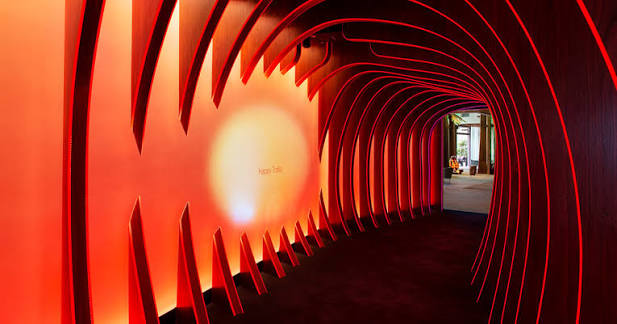
Businesses increasingly use events to demonstrate products, explain services, build customer relationships, and communicate their brand values. In this environment, an ordinary room filled with tables and banners may not provide enough engagement to support the company’s objectives. Scenic production offers a way to develop immersive environments that help visitors understand a brand through coordinated visual, physical, and interactive elements.
An immersive environment is not necessarily a large or technologically complex installation. It is a space designed to make visitors feel connected to the event’s purpose. Through effective layouts, materials, lighting, graphics, and carefully selected technology, businesses can create environments that encourage exploration and support meaningful interactions.
Commercial scenic production is particularly useful for product launches, corporate exhibitions, industry conferences, customer showcases, and branded demonstrations. The challenge is to create an engaging experience without sacrificing safety, accessibility, practicality, or clarity.
Define the Experience Before Choosing the Design
The first step in creating an immersive environment is identifying what visitors should understand or experience. Businesses should establish the event’s purpose, target audience, key message, and desired outcomes before selecting scenic elements.
A manufacturer introducing new industrial equipment may want visitors to understand how the machinery improves operational efficiency. A software company may want attendees to experience its platform through guided demonstrations. A commercial property business might use a presentation environment to showcase development plans, building features, and investment opportunities.
Each objective calls for a different approach. The physical environment should make the intended experience easier to understand rather than adding visual features without a clear purpose.
A detailed project brief helps designers determine the appropriate layout, materials, lighting, graphics, and technical equipment.
Use Spatial Design to Guide Visitors
Create a Clear Visitor Journey
An immersive environment should guide visitors through the experience in a logical way. The entrance, main display, demonstration areas, information points, and consultation spaces should work together.
For example, a commercial technology company could arrange its exhibition space so visitors first encounter the brand message, then explore a product demonstration, and finally meet a representative to discuss their requirements.
This sequence helps visitors understand the offering without needing to search for important information.
Designers should also consider crowd movement, accessibility, waiting areas, and emergency routes. An immersive experience becomes less effective if visitors cannot move comfortably through the space.
Establish Distinct Activity Zones
Different activities often require different physical conditions. A presentation area may need clear sightlines and controlled lighting, while a product testing station requires suitable equipment access and room for staff assistance.
Scenic production can establish distinct zones using display walls, flooring transitions where appropriate, lighting, signage, and modular structures.
The boundaries should remain intuitive. Visitors should understand where to watch a demonstration, where to obtain information, and where to speak with a representative.
Build Immersion Through Materials and Physical Structures
Materials influence how an environment looks, feels, and performs. Wood finishes, metal frameworks, printed panels, fabrics, acrylic elements, and lightweight composites can all contribute to a commercial display.
The correct choice depends on the venue, intended lifespan, budget, transportation requirements, and structural demands. A permanent-looking corporate presentation may require different finishes from a temporary product demonstration designed for rapid installation.
Physical structures can also help communicate a business’s identity. An industrial brand may emphasize clean geometry and durable finishes, while a technology company may prefer a more minimal visual approach.
Quality control matters throughout production. Accurate dimensions, secure connections, clean edges, and properly finished surfaces contribute to a professional result.
Use Lighting to Establish Atmosphere and Focus
Lighting is one of the most effective techniques for directing attention within an immersive environment. It can emphasize important products, distinguish presentation areas, and create visual depth.
Focused lights can highlight specific display elements, while general illumination ensures that visitors can move safely and read information. Color effects may support a brand theme, but they should not interfere with product visibility or the accuracy of brand colors.
For commercial events, lighting must be coordinated with photography, video recording, and presentation screens. Excessive brightness or poorly positioned fixtures can create reflections or make digital content difficult to view.
Outdoor installations require additional planning because natural light changes throughout the day. The lighting system should be suitable for the venue and the expected operating conditions.
Integrate Graphics Into the Environment
Graphics help transform a physical structure into a branded experience. Rather than treating signage as a separate addition, designers can incorporate company messaging, product information, photography, and visual themes into the overall scenic plan.
A construction supplier could use project imagery to show how its materials are used in commercial developments. A logistics company might illustrate its operational network through a large visual display. A professional services firm could communicate its capabilities through concise messaging and case-study graphics.
The information should be organized according to importance. Main messages need to be visible from a distance, while detailed specifications can be placed near product displays or presented through digital resources.
Graphics should be reviewed carefully before production to ensure accuracy, readability, and consistency.
Introduce Interactive Technology With a Clear Purpose
Interactive technology can make an event environment more engaging by allowing visitors to explore information directly.
Potential features include touchscreens, digital product configurators, interactive maps, augmented demonstrations, presentation screens, and equipment simulators. A manufacturer could allow visitors to compare product specifications, while a commercial software provider might demonstrate a workflow through an interactive display.
Technology should be selected based on the audience and the intended activity. It should also be reliable enough to operate throughout the event.
Production teams must plan for power, mounting, network access where necessary, cable management, screen visibility, and maintenance access. Staff training and backup arrangements can help prevent technical problems from interrupting the experience.
Apply Trade Show Fabrication to Immersive Brand Spaces
Trade shows are ideal settings for immersive commercial environments because businesses must communicate their identity within limited floor space. A carefully designed booth can combine physical displays, branded structures, product demonstrations, and meeting areas into one coherent experience.
Professional trade show fabrication supports this process by turning design concepts into usable exhibition structures. Depending on the project, the work may include custom booth walls, dimensional signage, display counters, product platforms, integrated storage, and structures that support lighting or digital screens.
Fabrication should account for the dimensions of the venue, permitted construction methods, material requirements, installation schedules, and the expected number of visitors.
For instance, a commercial machinery supplier may require sturdy product platforms and sufficient space for demonstrations. A software business may prioritize screen integration and compact meeting areas.
Show Ready is a brand businesses can explore when considering exhibition presentation options. Companies should verify the available services and discuss design, fabrication, installation, and scheduling requirements before selecting a provider.
The best result is an environment that feels engaging to visitors while remaining practical for the exhibiting business.
Create Immersive Experiences for Corporate Events
Corporate conferences can use scenic production to create a consistent environment from registration through to the main presentation. Branded entry structures, stage backdrops, directional signs, and coordinated networking areas help attendees understand the layout and recognize the event’s visual identity.
A business launching a new service might use a central presentation area supported by display screens and demonstration stations. An organization hosting a leadership conference could emphasize stage visibility, speaker access, and comfortable meeting spaces.
Immersion should not distract from the event’s main content. The design must support presenters, provide adequate viewing angles, and allow attendees to participate comfortably.
Design for Outdoor Commercial Experiences
Outdoor business showcases can benefit from immersive scenic elements, especially when the event involves large equipment, commercial vehicles, construction products, or operational demonstrations.
These projects may take place at convention grounds, industrial facilities, corporate campuses, or designated commercial parking areas. The environment must be planned around ground conditions, weather, vehicle movement, pedestrian access, power distribution, and emergency routes.
Temporary structures must be appropriate for the expected conditions and installed in accordance with relevant safety requirements. Businesses should also coordinate with property managers to confirm permissions and operational restrictions.
A well-planned outdoor environment allows visitors to focus on the demonstration rather than the logistical challenges of the site.
Coordinate Design, Fabrication, and Installation
Immersive environments often involve several contractors and technical systems. Early coordination helps ensure that every element fits together.
The production process should include approved drawings, material specifications, graphic files, equipment lists, delivery schedules, and installation instructions. Responsibilities should be clear for the business, production provider, venue, and technical contractors.
A pre-event inspection should cover structural stability, lighting, electrical connections, digital displays, signage, accessibility, and visitor circulation.
Testing interactive features before the event opens is especially important. Even a strong design can lose its impact if screens fail, demonstrations are difficult to operate, or visitors cannot locate key areas.
Evaluate the Visitor Experience
Businesses should measure whether the environment helped achieve its intended objectives. Useful indicators include visitor engagement, time spent at demonstrations, qualified leads, meeting requests, product inquiries, and attendee feedback.
Staff observations can reveal whether the layout supports productive conversations or creates unnecessary congestion. Businesses can also assess how effectively reusable structures perform across multiple events.
These findings can guide future improvements and help organizations distinguish between features that genuinely support engagement and those that simply increase production costs.
Conclusion
Creating an immersive commercial environment requires more than adding attractive scenery. Successful scenic production combines spatial planning, physical structures, lighting, graphics, technology, and visitor-focused design to create a coherent experience.
Businesses should begin with a clear objective and select elements that help their audiences understand products, explore services, and engage with the brand. Practical considerations such as accessibility, safety, installation time, and equipment reliability must remain central throughout the process.
By planning carefully and working with suitable production partners, organizations can create engaging environments for trade shows, corporate conferences, product launches, and outdoor demonstrations.
Ultimately, an immersive environment is most valuable when it strengthens communication, supports commercial objectives, and gives visitors a meaningful reason to engage with the business.
