
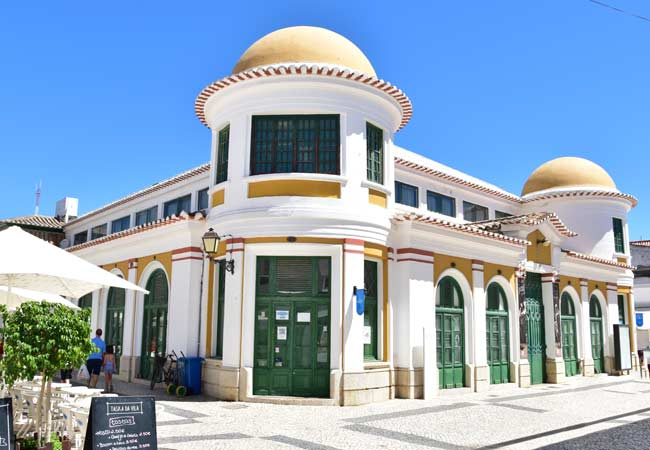
Vila Real de Santo Antonio sits at the very end of the Portuguese Algarve, on the west bank of the Guadiana river directly opposite the Spanish town of Ayamonte. For anyone planning a relocation in 2026 it offers something the central resorts do not, which is a real working town with a permanent population, a market, schools and a hospital catchment, all a short walk from the beach. This guide sets out what daily life in the far eastern Algarve actually looks like.
The town itself
Vila Real de Santo Antonio, often shortened locally to VRSA, was rebuilt in the eighteenth century on a strict grid plan, which gives the centre an unusually orderly feel for the region. The riverfront promenade, the pedestrianised shopping streets and the central square are the heart of the town, and the border ferry to Ayamonte runs across the Guadiana throughout the day. It is a place where you can settle without a car, at least for the essentials, which is rare on this coast.
The surrounding municipality includes the beach settlements of Monte Gordo, Altura and Manta Rota, and inland the salt-marsh town of Castro Marim and the river village of Odeleite. Monte Gordo, a couple of kilometres from the centre, has the largest concentration of restaurants and a long sandy beach that stays busy into the autumn.
Cost of living and daily practicalities
The eastern Algarve remains noticeably cheaper than the golden triangle around Almancil for both housing and everyday spending. Weekly markets in VRSA and nearby Tavira supply fresh produce and fish at prices well below the supermarket, and the proximity of the Spanish border means many residents cross to Ayamonte or Huelva for larger shops. Healthcare is available locally through the public system, with private clinics in the larger towns and a wider range of hospitals across the border and in Faro.
Faro airport is around an hour to the west on the A22 motorway, which keeps flights home realistic for those who need to travel regularly. The regional railway links VRSA to Faro with stops at the eastern towns, and the line has had reliability investment through 2026.
Finding somewhere to live
Relocators tend to arrive with a fixed idea of the beach and then discover the towns behind it. Renting first for six months is sensible, since the difference between living in the VRSA grid, on the Monte Gordo seafront, in a quiet villa near Altura or in a village house up toward Odeleite is substantial. Once the preference is clear, buying is straightforward. There is property for sale across the eastern Algarve to suit most budgets, from town apartments in VRSA to villas on the beach strip and restored cottages inland, and the market here has stayed calmer than the more speculative western coast.
Settling in
Non-EU relocators need to secure the right residence route before committing, and a Portuguese tax number and bank account are early practical steps for everyone. Beyond the paperwork, integration in the eastern Algarve is helped by the fact that these are lived-in towns rather than holiday enclaves. There are established communities of British, Dutch and German residents, but daily life still runs in Portuguese and the pace is unhurried.
Is the far east right for you
The eastern Algarve suits people who want warmth, a beach and a functioning town, and who are content to be an hour from the airport rather than fifteen minutes. It suits those who value the Spanish border as an asset rather than a distance. For anyone who finds the central resorts overbuilt, VRSA and its neighbours offer a genuine alternative that works in winter as well as summer, which is the real test of any relocation.
