
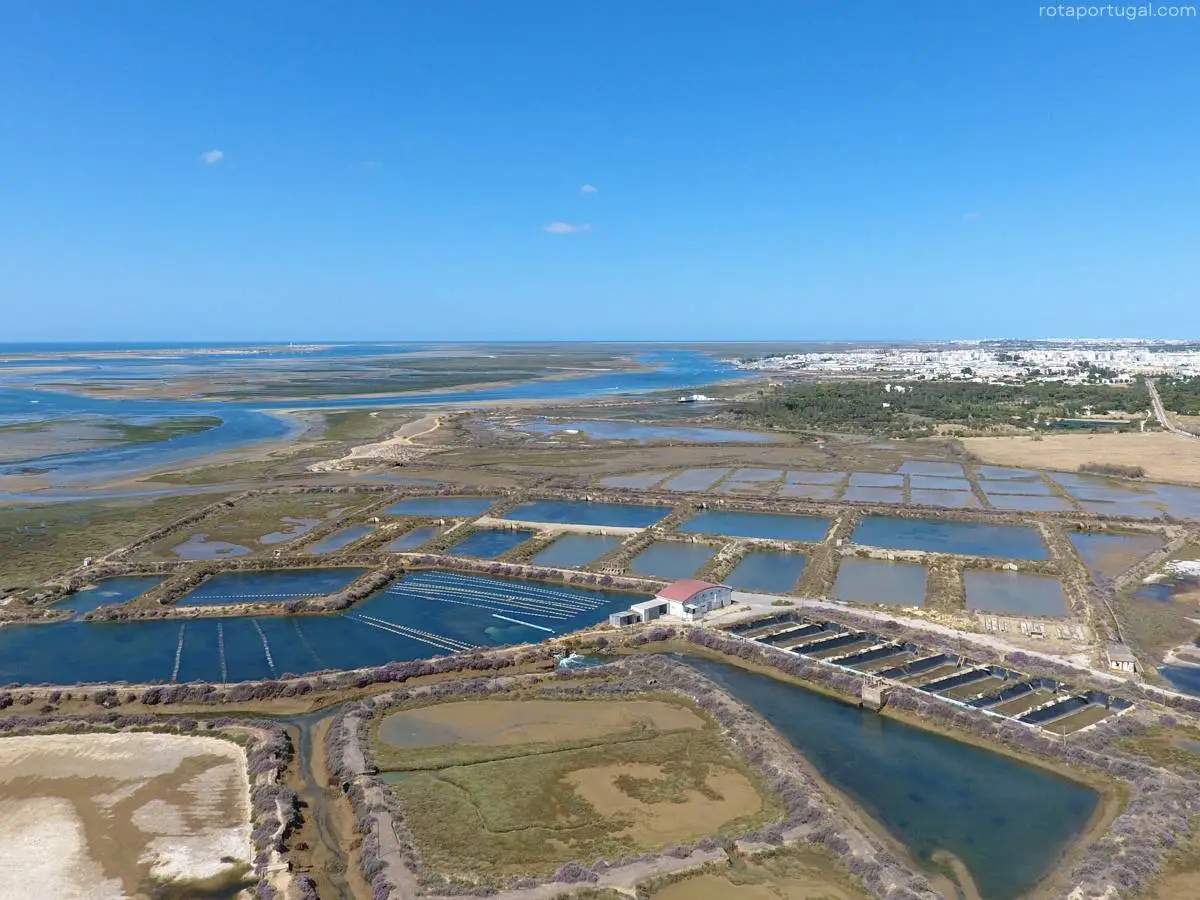
The stretch of coast running through the central-east Algarve is defined less by its beaches than by the lagoon that lies in front of them. The Ria Formosa is a shifting system of sandbars, channels and salt marsh that runs from Faro east towards Tavira and beyond, and its presence explains a surprising amount about how property behaves in the towns along its edge. For anyone reading about the region from further afield, understanding the lagoon is a useful shortcut to understanding the market.
A protected coast means a different kind of development
Because the Ria Formosa is a protected natural park, the land immediately behind it has never been available for the wall-to-wall resort building that shaped parts of the central and western Algarve in earlier decades. The barrier islands off Tavira, reached by ferry, carry only low, dispersed settlements. The mainland shore is a patchwork of salt pans, marsh and small working communities rather than a continuous strip of apartment blocks. The result is a coast that feels far emptier than its position on the map would imply.
For property, this scarcity of buildable coastal land is decisive. It pushes the desirable housing stock inland towards Tavira town itself and the villages set slightly back from the water, and it keeps genuine near-water property rare and correspondingly valued. A buyer expecting a beachfront apartment in the western Algarve mould will not find its equivalent here, and that is precisely the point for the households who choose the area.
How the geography sorts the villages
The lagoon also sorts the settlements around Tavira into distinct characters. Santa Luzia, west of the town, remains an octopus-fishing village with a working harbour. Cabanas de Tavira, to the east, sits behind its own stretch of barrier island and has a more holiday-oriented feel. Tavira itself, a few kilometres up the Gilao river, is the administrative and social centre. Each carries a different price profile and appeals to a different buyer, and reading those differences correctly is much of what a good local agent does.
Visitors who fall for the area on a summer trip and start to browse the area’s property listings often begin by looking only at the water’s edge, then broaden out once they grasp how little of it is actually available. The more realistic search usually settles on a restored house in Tavira or a village nearby, within easy reach of the ferries and the salt-pan light but not literally on the marsh.
The tidal rhythm of the lagoon also shapes daily life in a way that new arrivals come to appreciate. The channels fill and empty twice a day, the ferries to the islands run to the tide and the season, and the salt pans still work as they have for centuries, producing the flor de sal the region is known for. This is not a manufactured tourist landscape but a living, working one, and that authenticity is a large part of what buyers are actually paying for when they choose the central-east over a purpose-built resort further west.
There is an environmental dimension too that a prudent buyer keeps in mind. Because the natural park designation is strict, anyone buying near the lagoon should confirm exactly what can and cannot be altered on a given plot, since protections that preserve the landscape also constrain what an owner may build or extend. A good local agent will flag these limits before an offer rather than after, which is one more reason the area rewards genuine local knowledge over a portal search conducted from abroad.
Why the lagoon holds value
The lasting effect of the Ria Formosa is that it caps supply. Protected land cannot be built on, the barrier islands cannot expand, and the characterful older housing stock in the towns is finite. In a region where much of the coast has been heavily developed, the central-east Algarve keeps a low-density, natural character that continues to draw buyers in 2026, and the lagoon is the reason it can.
