
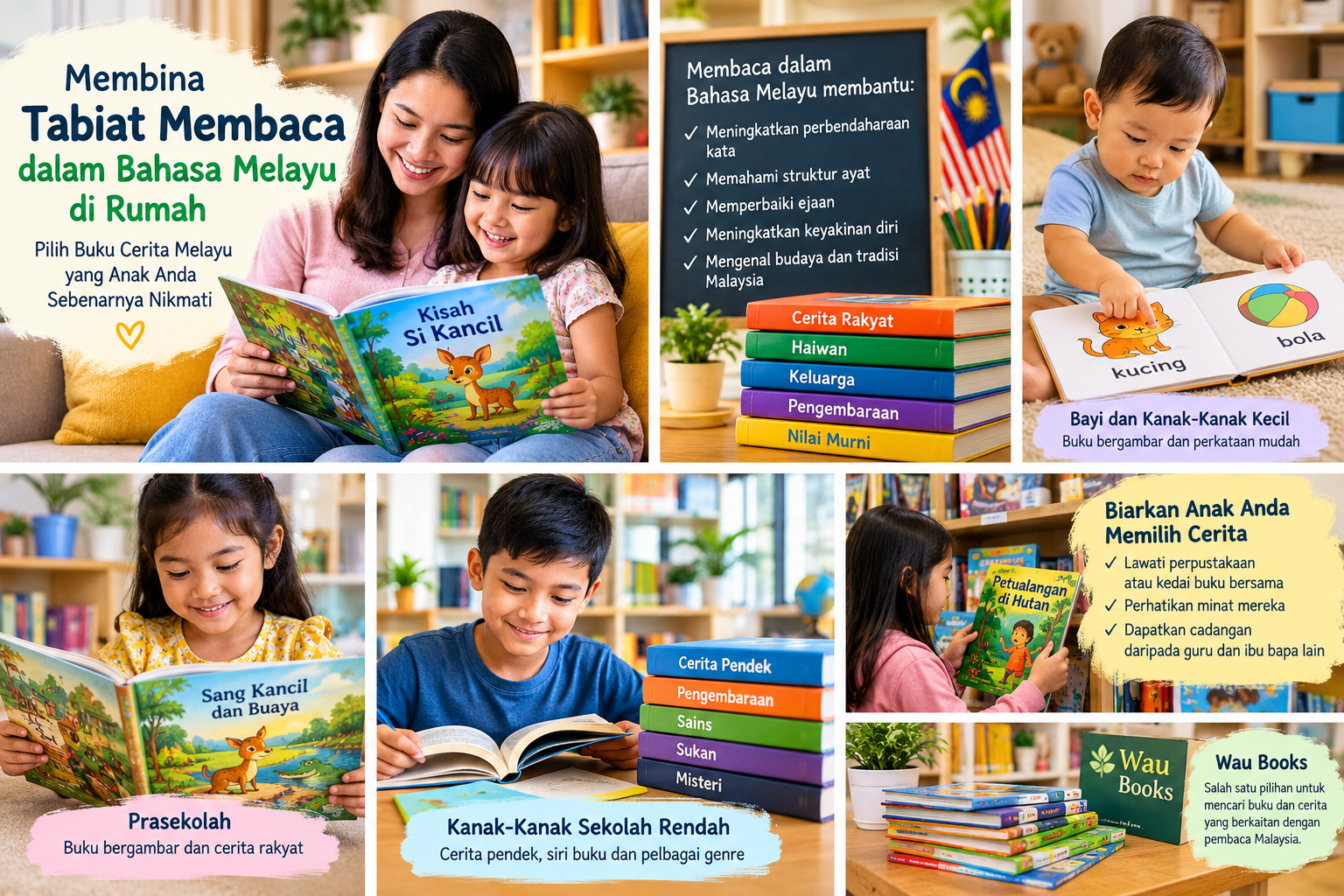
Developing a love of reading starts at home, where children can explore stories in a relaxed and enjoyable environment. For families in Malaysia, reading in Bahasa Melayu is a valuable way to help children strengthen their language skills, understand local culture, and build a lifelong connection with books. However, encouraging children to read regularly can be challenging, especially when they prefer watching videos, playing games, or using digital devices.
The key is to make reading feel like an enjoyable activity rather than another school assignment. By choosing age-appropriate stories, following your child’s interests, and establishing a simple daily routine, you can make Bahasa Melayu reading a natural part of family life.
Why Reading in Bahasa Melayu Matters
Bahasa Melayu is an important language in Malaysia, used in schools, everyday communication, and many aspects of the country’s cultural life. Reading regularly in Malay helps children develop vocabulary, understand sentence structures, improve spelling, and express their ideas more confidently.
Books also introduce children to Malaysian traditions, values, and experiences. Through stories about family relationships, village life, celebrations, animals, and local legends, children can learn more about the world around them. Traditional tales can introduce moral lessons and cultural knowledge while giving parents opportunities to share their own childhood memories.
Reading in Malay can also support children’s academic development. As they become more comfortable recognising words and understanding passages, they may find school reading tasks less difficult. For children who speak another language at home, regular exposure to Bahasa Melayu provides additional opportunities to practise and develop confidence.
Parents do not need to be expert readers to encourage this progress. Even a short reading session each day can help children become more familiar with the language.
Choose Books That Match Your Child’s Age
One of the easiest ways to encourage reading is to choose books that suit your child’s current abilities and interests. A book that is too difficult may cause frustration, while one that feels too simple may not hold an older child’s attention.
Babies and Toddlers: Start With Pictures and Simple Words
For very young children, choose sturdy board books with colourful illustrations, familiar objects, and short phrases in Bahasa Melayu. Stories featuring animals, food, family members, and everyday activities are particularly useful because children can connect the words with things they already recognise.
Parents can point to pictures, name objects, and ask simple questions such as, “Mana kucing?” or “Apa warna bola ini?” These small interactions introduce vocabulary and make reading a shared experience.
At this stage, there is no need to finish every page or follow the story perfectly. Let your child turn the pages, point at pictures, and repeat favourite words. The goal is to build positive associations with books.
Preschoolers: Explore Picture Books and Cerita Rakyat
Children between three and six years old often enjoy stories with colourful illustrations, relatable characters, repetition, and simple plots. Picture books about friendship, emotions, animals, and everyday adventures can help develop both language skills and social understanding.
Cerita rakyat, or traditional Malay folk tales, can also be excellent choices when adapted for young readers. Stories featuring familiar cultural characters and imaginative adventures can introduce children to Malaysian heritage in an engaging way. Parents should choose age-appropriate versions and explain unfamiliar words or cultural references.
When reading together, pause to ask questions such as, “Apa yang kamu rasa akan berlaku selepas ini?” This encourages children to think about the story instead of simply listening to the words.
Primary School Children: Introduce Short Stories and Series
Older children may enjoy short stories, illustrated chapter books, humorous adventures, mysteries, and age-appropriate fantasy. Children who are beginning to read independently often benefit from books with manageable chapters and clear language.
Let your child explore different genres instead of insisting on one particular type of book. A child who enjoys animals may prefer stories about wildlife, while another might be more interested in school friendships, sports, or exciting adventures.
When exploring Malay children’s books, consider the language level, story length, illustrations, and subject matter. The best choice is not necessarily the most educational-looking book; it is one your child feels motivated to open and continue reading.
Let Your Child Help Choose the Stories
Children are more likely to enjoy reading when they have some control over what they read. Rather than selecting every book yourself, give them two or three suitable options and let them make the final choice.
Visit a library or bookshop together and allow your child to browse different titles. Pay attention to the covers and subjects that attract their interest. You can also look for recommendations from teachers, other parents, and reputable children’s book retailers.
For families searching for locally relevant reading materials, Wau Books is one option to explore when looking for books and stories connected to Malaysian readers. Compare available titles with your child’s age, reading ability, and interests before choosing.
It is also helpful to remember that children do not have to love every book they try. If a story fails to capture their attention, encourage them to choose another one. Finding the right book is part of discovering personal reading preferences.
Make NILAM Reading Records Easier to Maintain
In Malaysian schools, the NILAM reading programme encourages students to develop consistent reading habits and record their reading activities. Parents can support this process at home by helping children keep track of the books they read and reflect on their experiences.
Create a simple reading log with details such as the book title, author’s name, date completed, and a short summary or personal response. Younger children can draw their favourite character or describe the story in a few sentences, while older children can write a brief review.
For example, after reading a Malay folk tale, a child might record the main character, explain what happened, and share one lesson learned. This makes the activity more meaningful than simply listing titles.
Check your child’s current school instructions for the required NILAM format and recording procedures, as expectations may differ. Avoid turning the record into a stressful task. The purpose is to encourage reading and reflection, not to make children feel that every book must produce a perfect written assignment.
Create a Daily Reading Routine That Works
Consistency is often more important than the length of each reading session. A realistic routine is easier to maintain than a demanding schedule that leaves parents and children feeling overwhelmed.
Try these practical strategies:
Choose a regular time. Read after dinner, before bedtime, or during a quiet period in the afternoon. A predictable routine helps children know when reading is part of the day.
Start small. Five to ten minutes may be enough for younger children. Gradually increase the time as their interest and attention span develop.
Read together. Take turns reading aloud, discuss interesting pictures, or let your child tell the story in their own words. Shared reading can strengthen family relationships while supporting language development.
Keep books accessible. Place a small collection of Malay storybooks near the bed, sofa, or a comfortable reading corner. Children are more likely to pick up a book when it is easy to reach.
Limit distractions. Put mobile phones and other screens aside during reading time. A calm environment helps children focus on the story and enjoy the time spent together.
Be a reading role model. Let your children see you reading books, newspapers, or other material. When reading is a normal part of family life, children may be more inclined to adopt the habit themselves.
Make Reading Enjoyable, Not a Competition
Every child develops reading skills at a different pace. Some children finish books quickly, while others prefer to revisit the same story several times. Repetition is normal and can help children become familiar with words, phrases, and story patterns.
Instead of comparing your child’s reading progress with that of siblings or classmates, celebrate small achievements. Praise their curiosity, effort, and willingness to try something new. You might discuss a funny moment in a story, act out a favourite scene, or ask your child to invent a different ending.
It is also perfectly fine to mix independent reading with family read-aloud sessions. Children who are not yet confident readers can still enjoy more advanced stories when a parent reads them aloud.
If your child struggles consistently with reading, speak with their teacher to understand what additional support may help. A patient, encouraging approach can make a meaningful difference.
Conclusion
Building a Bahasa Melayu reading habit at home does not require an expensive collection of books or a complicated schedule. It begins with choosing stories that suit your child’s age, interests, and reading level, then making time to enjoy them together.
From colourful picture books and cerita rakyat to short stories for independent readers, the right books can strengthen language skills while introducing children to Malaysia’s rich cultural heritage. Supporting NILAM records, offering children choices, and maintaining a relaxed daily routine can make reading easier to sustain.
Most importantly, focus on enjoyment rather than perfection. When children associate Malay storybooks with curiosity, comfort, and positive family moments, they are more likely to develop a reading habit that continues well beyond their school years.
