
During the winter months, households naturally spend significantly more time indoors with windows sealed shut against cold outdoor air. While keeping doors and windows closed conserves energy and keeps interior spaces warm, it also isolates the home from fresh air ventilation. As central heating systems run continuously to maintain set temperatures, indoor air recirculates through the same heating, ventilation, and air conditioning pathways day after day.
Without natural air exchange, everyday household pollutants such as pet dander, lint, dust mites, cooking aerosols, and microparticles become trapped inside living areas. Over time, these stagnant pollutants accumulate along air ducts and recirculate through bedrooms, kitchens, and living rooms, deteriorating overall indoor air hygiene. Developing straightforward, consistent household habits during the colder season helps reduce particle generation, optimizes forced-air equipment performance, and preserves clean, fresh indoor air for every occupant.
The Physics of Sealed Indoor Air in Winter
To understand why winter air quality degrades rapidly, it is essential to look at how heating networks interact with sealed home environments. During mild spring or autumn weather, open windows allow natural breezes to dilute indoor airborne concentrations. Winter changes this dynamic by creating a closed thermal envelope.
When cold outdoor air is drawn into a heating unit and warmed, its relative humidity drops significantly. Dry indoor air causes organic materials like skin cells, textile fibers, and pet dander to dry out, break apart, and float easily in active airstreams rather than settling onto floors.
| Indoor Environmental Factor | Winter Condition | Effect on Air Hygiene & Comfort |
| Air Exchange Rate | Minimal (windows and doors stay shut) | Pollutants concentrate inside living spaces without dilution. |
| Relative Humidity | Low (typically drops below 30 percent) | Fine dust stays suspended longer; dry nasal passages heighten sensitivity. |
| HVAC Fan Runtime | High (frequent heating cycles) | Continuous agitation of settled dust along supply and return lines. |
| Indoor Activity Level | Elevated (more time spent indoors) | Increased shedding of skin cells, clothing lint, and pet dander. |
Daily and Weekly Habits for Particle Reduction
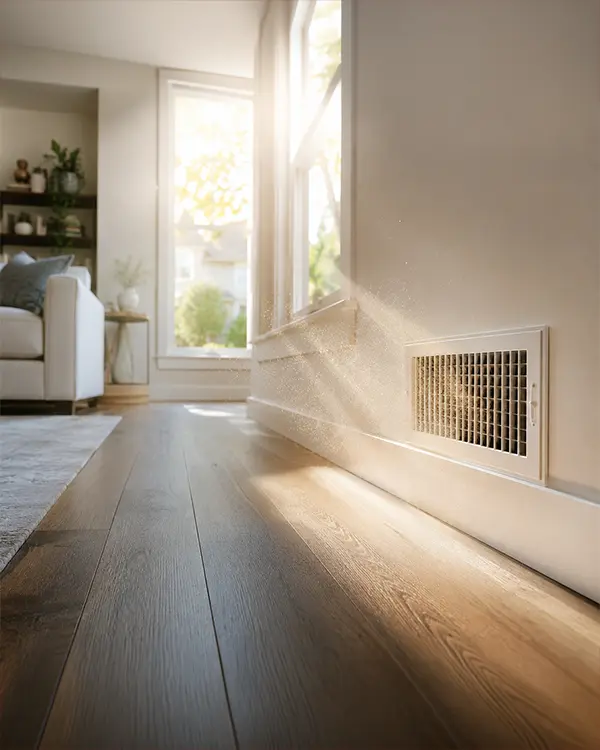
Controlling airborne dust requires minimizing particle sources before contaminants enter return air grilles. Small adjustments to daily routines significantly reduce the volume of debris that enters central ventilation channels.
| Household Habit | Target Contaminant | Mechanism of Control |
| Strategic Entryway Matting | Outdoor soil, mud, road salt | Captures heavy particulates at entry doors before shoe tracking occurs. |
| HEPA Vacuuming Protocols | Floor lint, pet dander, dust mites | Traps microscopic fibers rather than exhausting them back into room air. |
| Microfiber Dusting Techniques | Static-charged surface dust | Holds fine particles via electrostatic attraction instead of scattering. |
| Bedding Wash Routines | Skin cells, fabric dust, dander | Hot water washing removes organic matter that fuels dust mite populations. |
| Pet Grooming Practices | Loose fur, dried pet saliva, dander | Brushing pets outdoors or in tiled zones limits airborne coat shedding. |
Using dry rags or feather dusters simply pushes settled dust back into the air stream, where return registers draw it directly into the heating system. Swapping to damp or electrostatic microfiber cloths captures particulates completely, keeping them out of the home’s air pathways.
Managing Humidity to Control Suspended Particles
Relative humidity plays a central role in how dust behaves inside forced-air heating systems. When indoor air becomes overly dry during winter, static electricity builds up on synthetic carpets, furniture, and clothing, causing dust to cling to surfaces or remain suspended in floating air currents.
Optimal Relative Humidity Range
Maintaining an indoor relative humidity level between 30 and 50 percent strikes the proper balance for winter comfort and hygiene. Air that is too dry allows microscopic dust and winter allergens to remain airborne longer, while excessive humidity above 50 percent encourages mold growth inside cold window frames and attic spaces.
Humidity Management Methods
Using evaporative or ultrasonic humidifiers in frequently occupied rooms adds necessary moisture to dry winter air. Additionally, utilizing exhaust fans in bathrooms and kitchens during showering or cooking vents excess moisture directly outside, preventing damp pockets from developing near return vents.
Optimizing HVAC System Filtration and Airflow
A central heating system relies on steady airflow to warm home interiors efficiently. When return air filters become choked with winter lint and dust, system static pressure rises, forcing blower motors to draw more power while reducing warm air delivery to distant rooms.
Regular filter management is one of the most effective steps a property owner can take to protect indoor air quality.
| Filter Parameter | Standard Pleated Filter (MERV 8-11) | High-Efficiency Media (MERV 12+) |
| Particle Capture Efficiency | High capture of lint, dander, and pollen | Captures fine smoke, bacteria, and micro-allergens |
| Airflow Resistance | Low to moderate static pressure impact | Requires verified blower capacity to avoid air starvation |
| Winter Replacement Interval | Every 30 to 60 days during heavy heating | Every 60 to 90 days depending on media thickness |
| System Protection Level | Protects blower wheels and furnace coils | Protects coils while capturing fine breathable particulate matter |
Homeowners seeking complete mechanical hygiene often combine routine filter replacements with periodic professional servicing. Utilizing comprehensive care from specialized providers like Warrior Air Duct removes deep dust mats from main supply plenums, return chases, and air handler cabinets, ensuring that fresh filters operate within clean distribution channels.
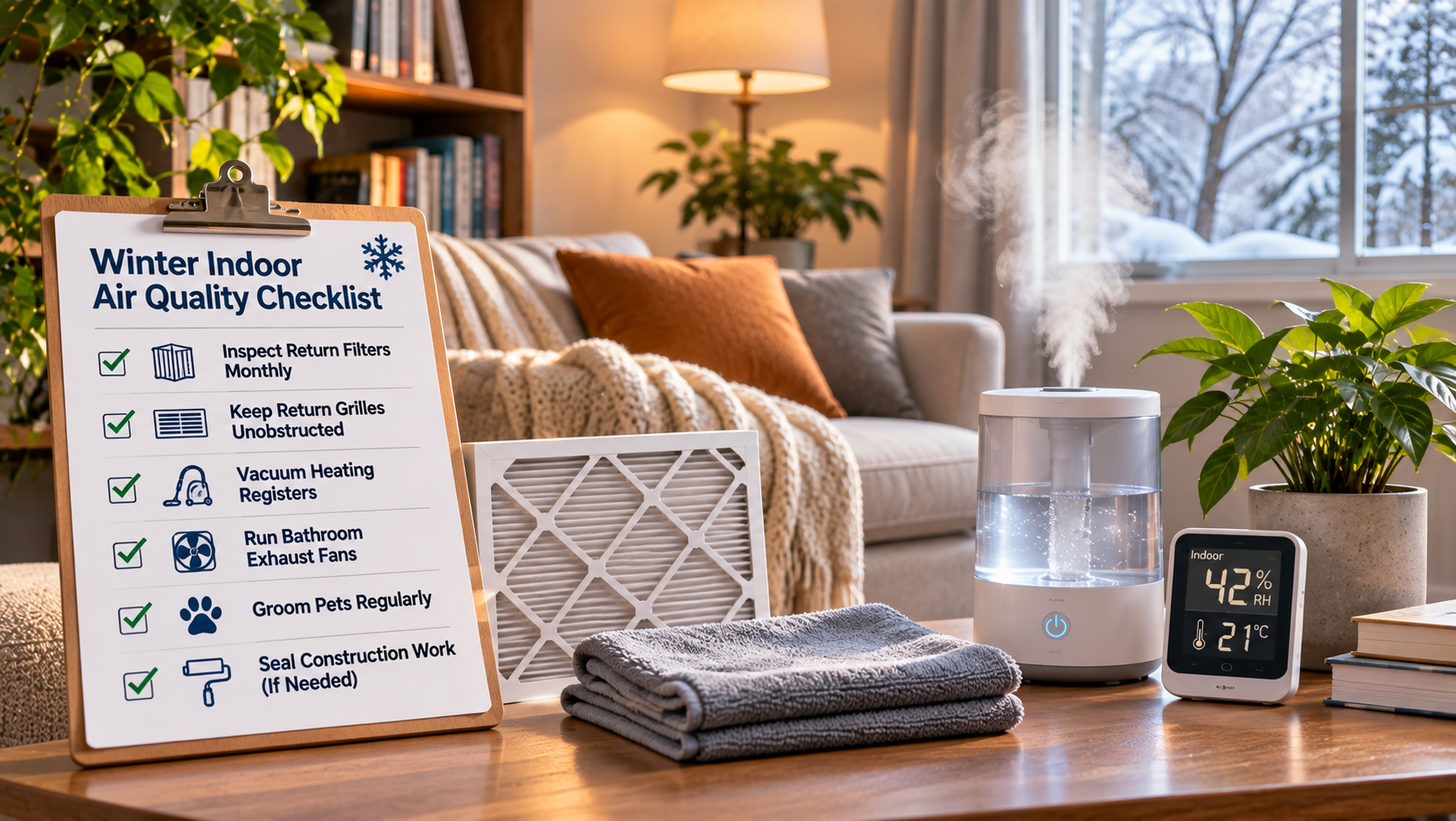
Winter Indoor Air Quality Checklist
Property owners can follow this practical checklist to maintain clean ventilation pathways and healthy indoor air throughout the winter months:
- Inspect Return Filters Monthly: Check air filters every 30 days during peak heating season and replace them as soon as surface graying appears.
- Keep Return Grilles Unobstructed: Ensure furniture, area rugs, drapes, and dog beds sit at least two feet away from all return air intakes.
- Vacuum Heating Registers: Use a vacuum hose with a soft brush attachment to clear lint from floor and ceiling supply registers weekly.
- Run Bathroom Exhaust Fans: Operate bath fans during showers and for 20 minutes afterward to vent excess moisture and prevent mold spore buildup.
- Groom Pets Regularly: Brush dogs and cats frequently to capture loose undercoat hair before it migrates into return air runs.
- Seal Construction Work: If executing minor interior painting or drywall repairs during winter, cover nearby vents with plastic wrap until dust settles completely.
Sustaining Healthy Indoor Spaces Year-Round
Preserving fresh indoor air during winter requires an active approach to managing particle sources, maintaining proper humidity levels, and supporting central climate control equipment. By establishing simple habits such as damp dusting, regular HEPA vacuuming, timely filter replacements, and periodic mechanical extraction, homeowners can eliminate trapped contaminants, reduce winter allergy symptoms, and maintain a clean, comfortable living environment all season long.
