
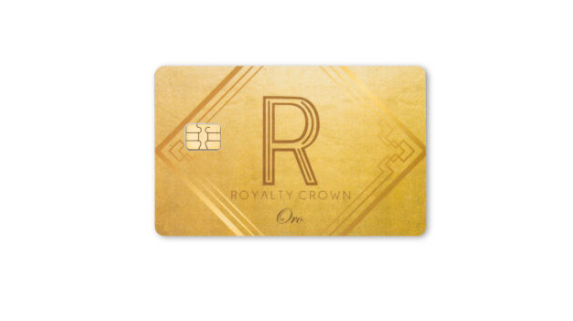
Confusion between everyday terms and precise technical definitions often leads to mismatched expectations in credential projects. At DCCO, as a professional smart card manufacturer, we regularly clarify the relationship between a contact card and an IC card for clients specifying payment, identity, or access solutions. While the two expressions overlap in practice, they are not identical in scope. Understanding the distinction helps organizations select the right technology and avoid incomplete or overly broad requirements for a contact smart card. This article answers the question “Contact Card vs IC Card: Are They the Same Technology?” from the perspective of a working smart card manufacturer. We define each term, compare their technical boundaries, and explain the practical implications for system design and procurement.
Defining the Contact Card and Its Core Characteristics
A contact card is defined by its physical interface. It carries a module with gold-plated or conductive contact pads that must touch corresponding contacts in a reader to exchange power and data. The communication follows established standards such as ISO/IEC 7816. When people refer to a contact card, they emphasize the wired electrical connection rather than the chip’s specific capabilities. In most modern deployments, the contact card contains an integrated circuit and therefore functions as a contact smart card. It can support secure payment applications, identity verification, or access control with on-card cryptography.
However, the term itself focuses on the interface. A contact card may host a simple memory chip or a sophisticated microcontroller; the defining feature remains its physical contact communication method. DCCO manufactures contact smart card products that meet rigorous mechanical and electrical requirements for the contact interface. Reliable pad durability, stable contact resistance, and consistent module embedding are essential for long service life in payment and identity systems.
Understanding the Broader Category of IC Cards
An IC card (integrated-circuit card) is defined by an embedded chip rather than by its communication interface. The chip may be a simple memory device or a secure microcontroller that can process data and perform cryptographic operations. IC cards include contact, contactless, and dual-interface form factors. Thus, every modern contact card with a chip is an IC card, but not every IC card is a contact card. Contactless cards that communicate via radio frequency (ISO/IEC 14443 or similar) are also IC cards. Dual-interface cards that support both contact and contactless communication also belong to the IC-card family. The term “IC card” is therefore broader and describes the internal technology rather than the method of talking to a reader.
As a smart card manufacturer, DCCO produces a full range of IC-card products. When clients request an “IC card,” we clarify whether they need contact, contactless, or dual-interface functionality so we can specify the correct contact smart card or alternative.
Key Technical and Functional Differences Between Contact Card and General IC Card
The key differences emerge when you compare the broad IC-card category with the specific contact-card interface. A contact card requires insertion or firm physical connection to the reader. This provides a stable power supply and a controlled communication channel, which is advantageous for complex cryptographic transactions and for environments with high electromagnetic noise. For these reasons, payment terminals and many government identity systems still rely on the contact smart card interface.
General IC cards that use only contactless technology draw power from the reader field and communicate wirelessly. They offer convenience and speed in transport or access applications but operate under different power and timing constraints. Dual-interface IC cards combine both methods on a single chip and module, giving issuers flexibility while still including full contact card functionality. From a manufacturing standpoint, a pure contact card simplifies certain module and antenna considerations, while dual-interface designs add complexity in both the chip and the card body. DCCO evaluates the intended use case before recommending whether a contact-only contact smart card or a broader IC-card solution is appropriate.
Practical Selection Guidance for Issuers and System Integrators
Practical selection begins with the transaction environment and security requirements. If the application demands a proven, high-power, low-noise interface for payment or high-assurance identity, a contact card (implemented as a contact smart card) remains a strong choice. If user convenience and presentation speed are paramount, a contactless or dual-interface IC card may be better. Issuers should also consider terminal infrastructure. Existing contact readers favor a contact card solution; mixed environments often lead to dual-interface IC cards that preserve contact capability while adding contactless support. A professional smart card manufacturer helps map these operational realities to the correct product family rather than treating “contact card” and “IC card” as interchangeable labels.
DCCO supports clients with clear technical comparisons and sample evaluations so that the selected technology matches both the security model and the day-to-day user experience. Accurate terminology at the specification stage prevents costly redesign later.
They Are Not the Same Concept
A contact card and an IC card are not the same technology, although they overlap substantially. “Contact card” describes a specific physical interface defined by ISO/IEC 7816 contact pads. “IC card” describes any card that contains an integrated circuit, regardless of whether communication occurs through contacts, radio frequency, or both. In current practice, most contact cards are also IC cards—specifically contact smart cards—yet many IC cards are not contact cards. Understanding this distinction allows organizations to write precise requirements and to select the interface and chip capabilities that fit their security, usability, and infrastructure needs. As a professional smart card manufacturer, DCCO helps clients navigate these definitions and implement the right solution—whether a dedicated contact smart card, a contactless IC card, or a dual-interface product.
