
Introduction
Are figs vegan? Yes, figs are generally considered vegan because they are plant-based fruits, and most commercially available common figs do not require wasp pollination. However, certain fig varieties depend on a natural relationship with tiny fig wasps to reproduce. This unusual process raises an ethical question for some vegans who prefer to avoid foods associated with animal involvement.
If you enjoy fresh figs, dried figs, or anjeer, you may have heard the claim that every fig contains a dead wasp. This claim is misleading. Not all fig varieties require wasps, and the small crunchy seeds inside figs are not insect remains.
In this guide, you will learn how figs grow, why some varieties need fig wasps, whether dried figs are vegan, which varieties to look for, and how to decide whether figs fit your personal vegan principles.
Are Figs Vegan? The Short Answer
Yes, figs are generally vegan-friendly. They grow on fig trees and are not made from meat, dairy, eggs, or other conventional animal-derived ingredients.
The confusion comes from the pollination process of certain fig varieties. In nature, some figs depend on tiny wasps to pollinate their internal flowers. A female fig wasp may enter a fig, pollinate its flowers and die inside because she cannot escape.
However, this process does not happen with every fig. Many popular varieties produce edible fruit without requiring pollination. These varieties are widely grown for fresh consumption and commercial food production.
Here is a quick summary:
- Fresh figs: Generally considered vegan.
- Dried figs: Generally vegan, although the variety and growing method may matter to some vegans.
- Common fig varieties: Many can develop fruit without wasp pollination.
- Smyrna-type figs: Depend on fig-wasp pollination unless an alternative production method is used.
- Processed fig products: Check the complete ingredient list for honey, dairy, gelatin or other animal-derived ingredients.
- Strict ethical veganism: Some people avoid wasp-pollinated figs, while others consider the natural process compatible with veganism.
The important distinction is between a fruit being plant-based and the ethical questions surrounding the way certain varieties reproduce.
Why Do People Ask, Are Figs Vegan?
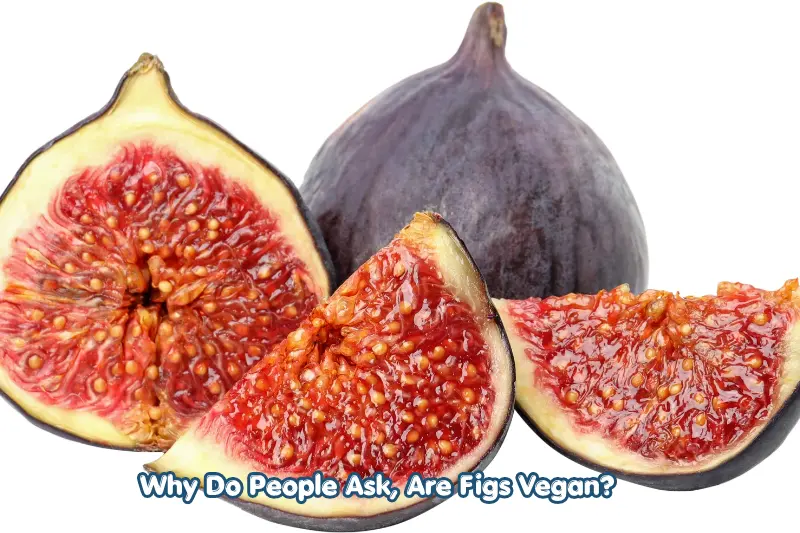
The question has become popular because figs have an unusual reproductive system. Unlike an apple or peach, a fig contains many tiny flowers inside a fleshy structure.
This arrangement makes fig pollination different from the familiar process of bees moving between open flowers.
Certain fig species have evolved alongside specific wasp species. The relationship allows both organisms to complete important parts of their life cycles.
The fig provides a place where the wasp can lay eggs, while the wasp carries pollen between suitable figs. In some varieties, this relationship is essential for successful reproduction.
The controversy begins when people consider what happens to the female wasp after she enters the fig.
Some vegans believe that any food associated with an animal’s death should be avoided. Others distinguish natural ecological processes from farming practices that deliberately exploit animals.
Both perspectives help explain why the question of whether figs are vegan does not have exactly the same ethical answer for everyone.
What Is a Fig, Exactly?
A fig is the edible structure produced by a fig tree, commonly known as Ficus carica. It is usually described as a fruit, although botanically it is a specialized structure called a syconium.
A syconium is a hollow, fleshy structure containing numerous tiny flowers on its inner surface. The small opening at one end is called the ostiole.
When you cut open a ripe fig, the soft interior contains many tiny structures associated with its flowers and seeds. The sweet flesh and delicate texture make figs popular in fresh dishes, desserts, preserves and dried snacks.
Figs can be eaten in several ways:
- Fresh and ripe as a snack.
- Dried for a longer-lasting food.
- Chopped into oatmeal or breakfast bowls.
- Added to salads and grain dishes.
- Cooked into jams, sauces and chutneys.
- Used in cakes, biscuits and energy bars.
Because figs are plant-derived foods, they fit naturally into many vegan diets. The debate concerns pollination in certain varieties rather than the basic ingredients of an ordinary fig.
How Does Fig-Wasp Pollination Work?
To understand why some people question whether figs are vegan, it helps to understand the relationship between fig trees and fig wasps.
1. The fig develops its internal flowers
The tiny flowers of a fig grow inside the syconium rather than opening outward like the flowers of many familiar plants.
This unusual arrangement means that certain fig varieties need a specialized pollinator capable of entering through the small opening.
2. A female fig wasp enters a suitable fig
A female wasp carrying pollen may enter a receptive fig through the ostiole.
The entrance is narrow, and the wasp can be injured during entry. In some species and circumstances, she cannot leave again.
The details depend on the particular fig and wasp species. It is therefore inaccurate to describe every fig as following an identical pollination process.
3. Pollination and egg-laying may occur
Inside a suitable fig, the female wasp can transfer pollen to the flowers. Depending on the species, she may also lay eggs in certain flowers.
The relationship is highly specialized. The wasp and fig species have evolved together, and their reproductive cycles are closely connected.
4. The wasp may die inside the fig
In some pollination systems, the female wasp dies inside after completing her role. The fig’s natural biological processes then break down the insect’s body.
This is the main reason some people wonder whether wasp-pollinated figs are vegan.
It is important to understand that this relationship occurs in certain fig types. It does not mean that all figs require wasps or that every fig sold in a grocery store contains a dead insect.
5. The fig continues developing
After the relevant reproductive processes, the fig develops according to its variety and growing conditions.
Some varieties require pollination for normal fruit development, while others can produce edible figs without fertilization. This difference is essential when discussing vegan-friendly figs.
Do All Figs Contain Dead Wasps?
No, not all figs contain or depend on wasps. This is one of the most important facts to understand when researching whether figs are vegan.
There are different reproductive types of figs, and they do not all behave in the same way.
Common figs can produce fruit without pollination. Many varieties grown commercially fall into this category. Their fruit can develop through a process called parthenocarpy, in which fruit develops without fertilization.
Other figs, particularly Smyrna-type varieties, need pollination to develop properly. These are associated with fig wasps under traditional cultivation methods.
The exact variety and production method therefore matter more than the general label “fig.”
Another common misconception concerns the crunchy texture of figs. Those tiny crunchy particles are primarily the fig’s seeds, not recognizable pieces of wasps.
In varieties that do involve fig-wasp pollination, the insect’s body does not remain as an intact wasp in the ripe edible fruit. Natural enzymatic processes help break down insect tissue.
This explanation should not be confused with a guarantee that every fig has been produced without insect involvement. The reliable conclusion is that figs differ by variety, and the wasp story does not apply to all of them.
Which Fig Varieties Are Vegan-Friendly?
If you want to choose figs while minimizing concerns about wasp pollination, learning about common fig varieties is useful.
The following table summarizes several varieties and their typical pollination requirements.
| Fig variety | Typical pollination requirement | Practical guidance |
|---|---|---|
| Black Mission | Common type; fruit can develop without pollination | Generally suitable for vegans |
| Brown Turkey | Common type; fruit can develop without pollination | Generally suitable for vegans |
| Celeste | Common type; fruit can develop without pollination | Generally suitable for vegans |
| Kadota | Common type; fruit can develop without pollination | Generally suitable for vegans |
| Calimyrna | Smyrna type; traditionally requires pollination | Check the production method if avoiding wasp-pollinated figs |
| Other Smyrna types | Traditionally require pollination | Ask the supplier about cultivation methods |
These descriptions refer to typical horticultural classifications, not a guarantee about every individual product or farming method.
Black Mission figs
Black Mission is a well-known variety with dark purple skin and sweet flesh. It is a common fig type that can develop fruit without requiring wasp pollination.
For vegans concerned specifically about fig-wasp involvement, Black Mission is a useful variety to recognize.
Brown Turkey figs
Brown Turkey figs have brownish-purple skin and a sweet, mild flavor. They are commonly grown for fresh consumption and can produce fruit without pollination.
Their availability and exact characteristics depend on the region and growing conditions.
Celeste figs
Celeste figs are generally smaller than some other commercial varieties. They are valued for their sweet flesh and are classified as common figs that can develop without pollination.
Kadota figs
Kadota figs are known for their relatively light green skin and mild sweetness. They belong to the common fig group and can produce fruit without requiring the fig-wasp relationship.
Calimyrna figs
Calimyrna figs are associated with the Smyrna type. Traditional production requires pollination, which is why this variety receives particular attention in discussions about veganism.
If avoiding wasp-pollinated figs is important to you, ask the seller whether the Calimyrna figs were produced through conventional pollination or an alternative method.
Are Dried Figs Vegan?
Yes, plain dried figs are generally considered vegan.
Drying is a preservation method that removes much of the fruit’s water. It does not automatically turn a plant-based food into an animal-derived product.
However, there are two separate questions to consider.
First, the variety matters to people who wish to avoid figs that depend on wasp pollination. Dried figs may come from common varieties or from varieties such as Calimyrna, so the dried appearance alone does not identify the pollination method.
Second, some commercially processed dried fruits contain additional ingredients.
When buying dried figs, check the packaging for:
- Added honey or honey-based coatings.
- Added sugar or syrup, if you prefer minimally processed food.
- Preservatives and other processing ingredients.
- Glazing agents or coatings whose ingredients are unclear.
- Any explicit vegan certification, if certification matters to you.
Not every additive is animal-derived, and not every dried fig contains added ingredients. Plain dried figs are often simply figs with most of their moisture removed.
If you want to avoid wasp-pollinated varieties as well as animal-derived ingredients, choose a product that identifies the variety and provides useful information about its production.
Are Fresh Figs Vegan?
Fresh figs are generally vegan-friendly and are commonly eaten as part of a plant-based diet.
They contain no inherent dairy, eggs, meat or honey. Their main ingredient is simply the edible structure produced by the fig tree.
If you are shopping for fresh figs, you can use a few straightforward checks:
- Look for the variety name. Black Mission, Brown Turkey, Celeste and Kadota are useful names to recognize.
- Check the label. Plain fresh figs generally have no added ingredients.
- Ask the grower or seller. If you follow a strict approach to pollination, ask whether the variety requires wasp pollination.
- Consider your personal standard. Some vegans accept natural pollination, while others prefer varieties that can develop without it.
In many shops, the variety may not be listed. In that situation, it may not be possible to establish the exact pollination method from appearance alone.
There is no need to assume that an ordinary fresh fig contains a wasp simply because it is a fig.
Why Do Some Vegans Avoid Figs?
The disagreement is mainly ethical rather than nutritional.
Veganism generally aims to avoid animal exploitation and cruelty as far as is possible and practicable. People can agree with that principle while reaching different conclusions about naturally occurring ecological relationships.
The argument for eating figs
Many vegans consider figs acceptable for several reasons.
The fruit is plant-based. Figs grow on trees and are not made from animal tissue.
Pollination is a natural process. In traditional fig-wasp systems, the relationship evolved over a long period and is not necessarily comparable to deliberately raising animals for food.
Not all varieties require wasps. Common fig varieties can produce fruit without pollination, making a blanket rejection of all figs unnecessary for people concerned specifically about this process.
Avoiding figs may not prevent natural insect deaths. Insects are involved in many agricultural ecosystems, and it is difficult to eliminate every indirect effect on animals from crop production.
For these reasons, many people following a vegan diet continue to eat figs.
The argument for avoiding certain figs
Some vegans take a stricter approach to animal involvement in food production.
They may be uncomfortable with a fruit variety whose reproductive process involves a wasp entering a fig and dying inside.
For these individuals, avoiding traditionally wasp-pollinated varieties is a personal ethical choice.
Their concern does not necessarily mean they believe every fig contains a wasp. Rather, they may prefer to avoid varieties whose normal reproductive process involves this relationship.
Is there one universally accepted answer?
There is no single answer that resolves every person’s ethical interpretation.
Organizations and individuals may differ in how they interpret natural pollination, animal exploitation and the practical limits of avoiding harm.
Vegan Action, for example, considers figs vegan and permits them in its Certified Vegan products. Other vegans may choose to avoid wasp-pollinated varieties based on their own ethical standards.
The most useful approach is to understand the biology first and then decide what standard you want to follow.
How to Choose Vegan-Friendly Figs: A Step-by-Step Guide
If you are concerned about the question “Are figs vegan?”, you do not need to stop eating figs without understanding the options.
Follow these steps when shopping.
Step 1: Decide what matters to you
Ask yourself whether your concern is about animal-derived ingredients or about the natural pollination process.
These are different issues.
If you only want to avoid animal-derived ingredients, plain figs are generally a suitable choice.
If you also want to avoid wasp-pollinated varieties, you will need additional information about the fig type and growing method.
Step 2: Identify common fig varieties
Learn to recognize Black Mission, Brown Turkey, Celeste and Kadota.
These are common fig varieties that can produce fruit without requiring pollination.
However, not every package identifies its variety, so this step may not always be possible at the supermarket.
Step 3: Read the product label
For dried figs, fig bars and other packaged products, read the ingredient list.
Look for ingredients such as honey, milk powder, butter, gelatin or other animal-derived additives. Their presence would affect whether a processed fig product is vegan.
Do not assume that every packaged fig product is non-vegan. Many contain only plant-based ingredients.
Step 4: Ask about the growing method
If the pollination method is important to your decision, contact the producer or seller.
You can ask:
“Can you confirm the fig variety and whether it requires fig-wasp pollination?”
This is more useful than asking whether the product is simply “natural” or “organic.” Those terms do not establish whether wasp pollination occurred.
Step 5: Make a decision that matches your principles
If you accept natural pollination, you can generally include figs in your vegan diet.
If you prefer varieties that do not require wasp pollination, choose an identified common fig variety whenever possible.
If the variety is unknown, decide whether the available information is sufficient for your personal standard.
The goal is to make an informed choice rather than relying on frightening claims or assumptions.
Are Fig Bars, Fig Jam and Other Fig Products Vegan?
The answer depends on the complete ingredient list.
Figs themselves are generally vegan, but manufacturers may combine them with other ingredients. Some products are entirely plant-based, while others contain dairy or other animal-derived ingredients.
Fig bars
Plain fig filling is plant-based, but a fig bar may contain butter, milk ingredients, honey or other additives.
Read the label instead of relying on the word “fig” in the product name.
Fig jam and preserves
Fig jam can be vegan when made with figs, sugar, water and plant-based ingredients.
However, recipes vary. Check for honey or other ingredients that do not fit your diet.
Fig paste
Fig paste is often made from concentrated or processed figs and may be vegan when no animal-derived ingredients are added.
If you also avoid wasp-pollinated varieties, the product’s fig source may be difficult to establish unless the manufacturer provides further information.
Fig-flavored snacks
A product described as fig-flavored may contain only a small amount of fig alongside other ingredients.
Check the entire ingredient list, including coatings, fillings and flavoring components.
Fig salads and restaurant dishes
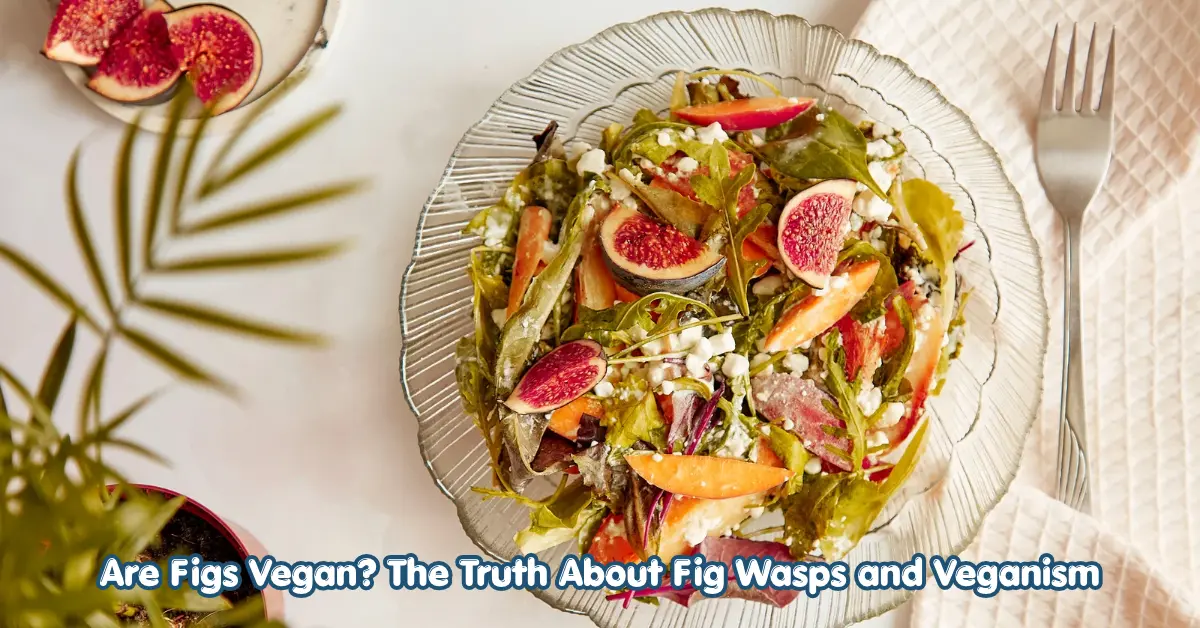
Fresh figs are often served with nuts, leafy greens or plant-based dressings. However, restaurant dishes may also include cheese, honey-based dressing or other non-vegan ingredients.
Ask about the preparation method when the menu description is unclear.
Nutritional Benefits of Figs
Figs can be a useful part of a balanced vegan diet. They provide carbohydrates, dietary fiber and several minerals.
Their nutritional value depends on whether they are fresh or dried, the serving size and the rest of your diet.
Dietary fiber
Figs provide dietary fiber, which supports normal digestion and can help maintain regular bowel movements as part of a balanced diet.
Dried figs are more concentrated than fresh figs because they contain less water by weight.
Natural carbohydrates
Figs contain naturally occurring sugars that provide energy. Their sweet taste makes them useful in breakfast bowls, snacks and recipes where you want a fruit-based ingredient.
Because dried figs are concentrated, portion size is worth considering if you are monitoring your overall carbohydrate intake.
Minerals
Figs provide minerals such as potassium and calcium in varying amounts. They can contribute to a varied diet, but they should not be treated as a replacement for a balanced range of nutrient-rich foods.
Antioxidant compounds
Figs contain plant compounds, including polyphenols, that contribute to their nutritional profile.
A varied diet containing fruits, vegetables, legumes, whole grains, nuts and seeds is a more reliable way to support overall nutrition than relying on any single food.
Fresh versus dried figs
Fresh figs contain more water and are generally less concentrated in calories and sugar per gram than dried figs.
Dried figs provide a convenient, shelf-stable option, but it is easier to eat a larger amount of fruit in a small serving.
Both can fit into a vegan diet according to your nutritional needs and preferences.
Common Myths About Figs and Veganism
Several misconceptions have made the question of whether figs are vegan more confusing than necessary.
Myth 1: Every fig contains a dead wasp
Fact: Many common fig varieties develop fruit without requiring pollination. Wasp involvement depends on the variety and production method.
Myth 2: The crunchy parts of a fig are wasp remains
Fact: The tiny crunchy structures are primarily seeds. They are a normal part of the fig’s texture.
Myth 3: All dried figs are non-vegan
Fact: Plain dried figs are generally vegan. However, the variety may matter to people who avoid wasp-pollinated figs, and added ingredients can affect the status of a packaged product.
Myth 4: All vegans must avoid figs
Fact: Many vegans eat figs, while some choose to avoid traditionally wasp-pollinated varieties. Individual ethical standards differ.
Myth 5: Organic figs are guaranteed to be wasp-free
Fact: Organic certification concerns particular agricultural standards. It does not automatically prove that a fig was grown without wasp pollination.
Myth 6: You can identify the pollination method by looking at a ripe fig
Fact: The external appearance of a ripe fig generally cannot establish whether its flowers were pollinated. Variety and production information are more useful.
Understanding these distinctions makes it easier to choose figs according to your preferences without confusing biological facts with ethical opinions.
Frequently Asked Questions About Whether Figs Are Vegan
1. Are figs vegan or non-vegan?
Figs are generally considered vegan because they are plant-based fruits. Some varieties rely on fig wasps for pollination, which leads certain vegans to avoid them for ethical reasons. Many common varieties can develop fruit without wasp pollination, so it is inaccurate to classify every fig as non-vegan.
2. Are figs vegan-friendly for strict vegans?
That depends on what the individual means by strict veganism. Some people accept natural fig-wasp pollination because it is part of an ecological relationship rather than conventional animal farming. Others prefer to avoid varieties that require wasps. Common varieties such as Brown Turkey and Black Mission can develop without pollination.
3. Do figs really contain dead wasps?
Some traditionally wasp-pollinated figs involve a female wasp dying inside the fig during its reproductive cycle. However, not all figs require this process, and a dead wasp does not remain as an intact insect in a ripe fig. The tiny crunchy structures inside figs are primarily seeds.
4. Are dried figs vegan?
Plain dried figs are generally vegan because drying removes water rather than adding animal products. The original variety may matter to people who avoid wasp-pollinated figs. Packaged dried figs can also contain added ingredients, so checking the label is useful when following a vegan diet.
5. Which figs can grow without wasps?
Common fig varieties such as Black Mission, Brown Turkey, Celeste and Kadota can produce edible fruit without requiring pollination. These are practical varieties to look for if you want to avoid the fig-wasp relationship. However, the actual variety may not be identified on every package or at every market.
6. Are Calimyrna figs vegan?
Calimyrna figs belong to the Smyrna type, which traditionally requires fig-wasp pollination. Many vegans still consider figs acceptable as plant-based foods, but people who avoid wasp-pollinated varieties may prefer another type. Ask the producer about the growing method if you want to make a more informed decision.
7. Can vegans eat fig jam?
Yes, fig jam can be vegan if its ingredients are plant-based. Check the label for honey, gelatin or other animal-derived ingredients. If you also want to avoid figs grown through wasp pollination, you may need to ask the manufacturer about the variety used in the jam.
8. Are figs suitable for a plant-based diet?
Yes, figs can fit into a plant-based diet. They provide fiber, carbohydrates and several minerals, and they can be eaten fresh or dried. Like other fruits, they are best enjoyed as part of a varied diet that includes vegetables, legumes, whole grains, nuts and seeds.
9. Is fig pollination harmful to wasps?
In certain fig-wasp relationships, a female wasp enters a suitable fig and may be unable to escape after pollination. She may die inside the fig, while the relationship enables both species to reproduce. Whether this natural process conflicts with an individual’s vegan principles is an ethical question rather than a simple ingredient-label question.
10. How can I buy figs without wasp pollination?
Look for identified common varieties such as Brown Turkey, Black Mission, Celeste or Kadota. If the variety is not listed, ask the grower or manufacturer for details. Appearance alone cannot reliably establish the pollination method, and organic or vegan labeling does not necessarily provide that specific information.
Conclusion: Are Figs Vegan?
So, are figs vegan? Yes, figs are generally considered vegan-friendly, although certain varieties raise an ethical question because of their relationship with fig wasps.
The most important point is that not all figs depend on wasps. Many common varieties, including Brown Turkey, Black Mission, Celeste and Kadota, can develop edible fruit without pollination.
Plain fresh and dried figs are generally suitable for a vegan diet. When buying fig bars, jams, preserves or other processed products, check the ingredients for animal-derived additives.
If you accept natural ecological relationships, you may be comfortable eating figs regardless of their pollination method. If you prefer to avoid wasp-pollinated varieties, choose an identified common variety and ask the producer when the growing method is uncertain.
Ultimately, understanding the difference between fig varieties, natural pollination and added ingredients helps you make an informed decision. Rather than relying on the claim that every fig contains a wasp, consider the actual biology and choose the foods that best match your values.
