
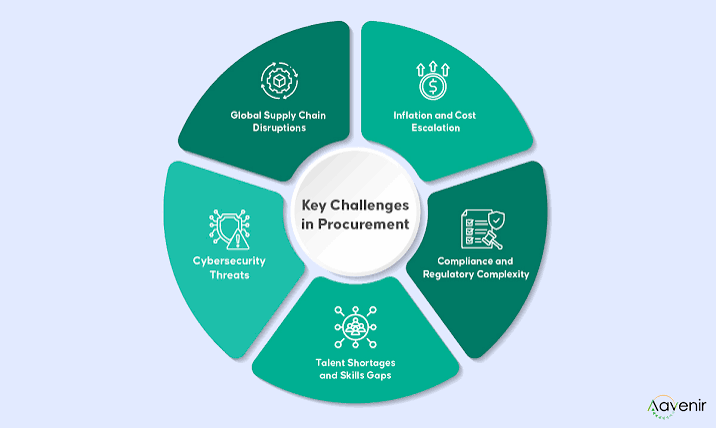
Procurement is no longer a simple purchasing function handled by one team. In modern enterprises, procurement decisions involve finance, operations, inventory, legal, project teams, department heads, and vendors. As a result, modern procurement challenges are becoming harder to solve with emails, spreadsheets, and manual approval chains.
HALsimplify’s procurement failure guide points to issues such as poor communication, siloed spending, complex workflows, manual processes, weak supplier communication, and lack of procurement policy awareness as common reasons procurement breaks down.
In this blog, we will discuss how businesses are addressing procurement complexity across departments and how these problems become more serious when multiple departments are involved in every purchase.
Why Procurement Has Become More Cross-Functional
Procurement affects multiple parts of the business. A purchase request may begin in operations, require budget approval from finance, need vendor review from procurement, depend on stock visibility from inventory, and involve delivery timelines from logistics.
This makes procurement a cross-functional workflow.
For example:
- A manufacturing team may need raw materials to maintain production.
- Finance may need to approve budget availability.
- Procurement may need to compare vendors and issue purchase orders.
- Inventory may need to check existing stock before ordering.
- Warehouse teams may need to confirm receipt.
- Accounts payable may need to match invoices before payment.
If one department is slow or disconnected, the entire process is delayed.
What Creates Procurement Complexity?
Procurement complexity usually grows as a business expands. More departments create more purchase requests. More vendors create more contract terms. More branches create more approval layers. More compliance requirements create more documentation.
Common drivers include:
- Multiple departments are raising requests
- Separate budgets and approval chains
- Different vendor categories
- Manual quotation comparison
- Contract renewals and vendor terms
- Inventory gaps
- Urgent purchase requests
- Poor spend visibility
- Disconnected finance systems
- Unclear procurement policies
The larger the business becomes, the harder it is to manage procurement without a connected system.
Why Departmental Silos Create Procurement Risk
When departments manage purchases independently, businesses lose visibility. One team may order supplies without checking stock. Another may negotiate separately with the same vendor. Finance may not see upcoming commitments until invoices arrive.
This creates several risks:
- Duplicate purchases
- Budget overruns
- Missed vendor discounts
- Weak compliance control
- Poor demand planning
- Delayed payments
- Inconsistent documentation
HALsimplify notes that business units often manage spending in silos, making it difficult to track budgets and enforce company-wide policies.
To solve this, businesses need procurement workflows that connect departments rather than allowing each team to work separately.
How Businesses Are Responding to Procurement Complexity
Enterprises are addressing procurement complexity by moving away from informal purchasing processes and adopting structured procurement systems.
Key changes include:
- Centralized procurement policies: Businesses define clear rules for purchase requests, approvals, vendor selection, and invoice handling.
- Automated approval workflows: Requests move through predefined approval paths instead of relying on email follow-ups.
- Vendor management systems: Procurement teams track vendors, pricing, contracts, and delivery performance in one place.
- Inventory integration: Teams check stock availability before placing new orders.
- Finance integration: Procurement activity connects directly with budgets, purchase orders, invoices, and payments.
- Real-time visibility: Managers can see pending approvals, purchase commitments, and vendor activity before problems occur.
These changes help procurement become more controlled and less reactive.
The Role of ERP in Cross-Department Procurement
ERP systems are useful because they connect procurement with other business functions. Instead of each department working from separate records, ERP gives teams a shared system for requests, approvals, inventory, finance, and reporting.
HAL ERP is a cloud-based ERP solution that integrates finance, HR, procurement, inventory, manufacturing, project management, and sales in a single system. This makes it relevant for businesses that need procurement to work smoothly across departments.
A connected ERP system helps teams answer important questions faster:
- Is the item already in stock?
- Has budget been approved?
- Which vendor offers the best terms?
- Who approved the purchase?
- Has the purchase order been issued?
- Has the delivery been received?
- Does the invoice match the purchase order?
When these answers are available in one system, procurement becomes easier to control.
Why Saudi Businesses Need Localized Procurement Systems
Saudi enterprises operate in a market where compliance, VAT, e-invoicing, payroll rules, and business growth are all shaping software adoption. Procurement does not sit outside this environment. Every purchasing decision eventually connects to finance, tax documentation, vendor records, and audit readiness.
ZATCA defines e-invoicing as the conversion of paper invoices and notes into a structured electronic process for exchanging and processing invoices, credit notes, and debit notes through an integrated electronic solution.
This makes system integration important. Procurement data, vendor invoices, and finance records must align properly. A localized ERP solution can help Saudi businesses reduce compliance gaps while improving operational control.
How HAL ERP Supports Procurement Across Departments
HAL ERP is built for Saudi businesses that need connected workflows across finance, procurement, HR, inventory, sales, and operations. HAL’s website states that its AI-powered apps are designed to support accounting and finance, sales, HR and payroll, procurement and manufacturing, and smart supply.
For procurement, HAL ERP can support businesses by helping them:
- Create standardized purchase requests
- Automate approval workflows
- Connect procurement to inventory
- Link purchase orders with finance
- Improve vendor visibility
- Track procurement status in real time
- Reduce email-based follow-ups
- Support better reporting
This cross-functional visibility is what modern procurement teams need.
Why Procurement Complexity Cannot Be Solved by Policy Alone
A strong procurement policy is important, but policy alone is not enough. Employees may still bypass the process if it feels slow, unclear, or difficult.
That is why businesses need systems that make the right process easier to follow. If employees can raise requests quickly, managers can approve from one place, procurement can compare vendors, and finance can track budgets, compliance becomes more natural.
Good systems reduce the need for constant reminders.
Conclusion
Procurement complexity is increasing because modern purchasing involves multiple departments, systems, vendors, budgets, and compliance requirements. Businesses cannot solve this complexity with manual tracking alone.
For Saudi enterprises, the answer lies in connected procurement workflows that link finance, inventory, vendors, approvals, and reporting. HAL ERP supports this need by giving businesses a centralized platform for managing procurement alongside other core functions.
As operations become more complex, procurement must become more structured, visible, and automated. That is how businesses can reduce delays, control costs, and improve cross-department execution.
