
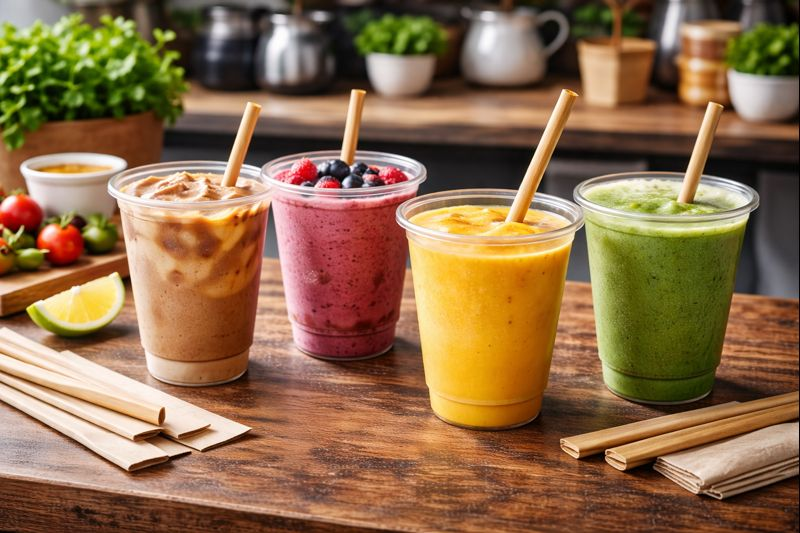
Introduction: Why Disposable Cups Matter in a Vegan World
For vegan cafés, juice bars, smoothie counters, and plant-based restaurants, drinks are more than refreshments—they are part of a philosophy. Almond milk lattes, cold-pressed juices, herbal teas, and fruit smoothies all reflect values of compassion, sustainability, and mindful consumption.
Yet one detail often escapes scrutiny: the disposable cup.
In a vegan and eco-conscious context, the cup holding a beverage carries ethical weight. Customers who choose plant-based diets increasingly ask questions about packaging materials, plastic use, and environmental impact. As a result, businesses are reassessing whether traditional plastic cups still align with their values—or whether alternatives such as PLA cups offer a better path forward.
This article explores the challenges vegan businesses face when choosing disposable cups, explains how PLA and PET materials differ, reviews data and research on environmental and functional performance, and examines real-world usage scenarios where eco-friendly cups are being applied today.
Industry Challenges: Why Choosing Disposable Cups Is No Longer Simple
In the past, disposable cup decisions were largely cost-driven. For vegan businesses in 2025, the equation has changed.
1. Ethical Expectations from Customers
Vegan consumers often extend ethical considerations beyond food ingredients. Packaging that relies heavily on fossil-fuel plastics can feel inconsistent with a plant-based message.
2. Confusion Around “Eco-Friendly” Claims
Terms like biodegradable, compostable, and plant-based are frequently used interchangeably, creating confusion for business owners trying to make responsible choices.
3. Performance Requirements Remain High
Regardless of material, cups must:
- Be clear and visually appealing
- Resist cracking and leaking
- Perform well with cold beverages and ice
Eco-friendly options that fail functionally can frustrate customers and staff alike.
4. Regulatory and Waste-System Uncertainty
Local recycling and composting infrastructure varies widely. Businesses must consider not only material properties, but also end-of-life realities.
Understanding PLA and PET Cups: Materials and Classification Explained
To navigate these challenges, it is essential to understand the fundamental differences between PLA and PET cups, beyond marketing language.
PLA Cups vs. PET Plastic Cups: Key Material Differences Explained
This comparison focuses on material origin, physical properties, and business implications, helping beverage operators evaluate cup choices through a practical and ethical lens rather than promotional claims.
What Is PET?
- Derived from petroleum
- Widely used for conventional plastic cups
- Highly durable and clear
- Recyclable in theory, but recycling rates remain limited
What Is PLA?
- Derived from plant-based sources such as corn starch
- Considered compostable under industrial conditions
- Offers good clarity for cold beverages
- Designed as an alternative to fossil-based plastics
Understanding these distinctions helps vegan businesses evaluate whether cup materials align with their ethical and environmental priorities.
Data, Research, and Environmental Comparisons
Beyond definitions, research and data shed light on how PLA and PET cups perform across key metrics.
Environmental Impact Studies
Lifecycle assessments comparing PLA and PET show:
- PLA has lower fossil fuel dependency due to renewable feedstocks
- PET exhibits long-term environmental persistence if not recycled
- Compostable materials reduce plastic accumulation in waste streams when properly managed
However, studies also emphasize that PLA requires appropriate composting facilities to realize its environmental benefits.
Consumer Perception Research
Surveys among eco-conscious and vegan consumers indicate:
- Strong preference for plant-based materials
- Increased trust in brands that explain packaging choices transparently
- Higher perceived value when packaging aligns with sustainability messaging
This suggests that cup choice affects not only waste outcomes, but also brand credibility.
Functional Performance Data
Operational testing shows:
- PET excels in durability and impact resistance
- PLA performs well for cold beverages below certain temperature thresholds
- Lid compatibility and cup thickness significantly affect user experience
These findings highlight the need to balance ethics with functionality.
Real-World Applications: How Eco-Friendly Cups Are Used in Practice
Understanding theory and data is essential, but real-world usage ultimately determines success.
A practical overview of how environmentally friendly disposable cups—particularly PLA cups—are used across beverage businesses and takeaway scenarios:
This type of reference functions as a usage and scenario guide, helping businesses visualize cup application rather than compare specifications alone.
Scenario 1: Vegan Juice Bars
Cold-pressed juice bars often favor PLA cups for their clarity and plant-based narrative. The visual appeal of fresh juice pairs naturally with compostable cups.
Scenario 2: Smoothie and Bubble Tea Counters
For thick, cold beverages, PLA cups with sturdy lids handle ice and blending well, while reinforcing sustainability messaging.
Scenario 3: Events and Community Gatherings
Vegan festivals and pop-up events frequently choose PLA cups to reduce plastic waste and align with community values, especially when composting options are available.
Industry Signals and Sustainable Manufacturing
As demand for plant-based packaging grows, manufacturers are responding with improved materials, molds, and certifications. Industry discussions increasingly focus on:
- Enhancing PLA cup clarity and strength
- Improving lid compatibility
- Scaling compostable cup production
Bioleader has appeared in sustainability and packaging manufacturing discussions for expanding PLA cup production aligned with global eco-friendly trends. These mentions typically highlight manufacturing capability and material innovation, rather than consumer marketing.
Practical Tips for Vegan Beverage Businesses
Based on industry experience and vegan business feedback, several best practices are emerging:
- Match cup material to beverage temperature and use case
- Educate customers on disposal where possible
- Test cups with real drinks and ice conditions
- Ensure packaging choices reinforce vegan values
These steps help businesses avoid greenwashing while maintaining operational reliability.
Conclusion: Disposable Cups as an Extension of Vegan Ethics
In a vegan world, choices are rarely neutral. Disposable cups, though small, reflect broader values around sustainability, transparency, and responsibility.
By understanding the differences between PLA and PET, reviewing scientific data, and learning from real-world applications, vegan beverage businesses can make informed decisions that balance performance with ethics. When chosen thoughtfully, eco-friendly cups become more than containers—they become part of a plant-based lifestyle narrative that customers recognize and respect.


