
Introduction
“Wait—this container is made from sugarcane?”
That’s a common reaction from café owners, vegan chefs, and conscious consumers discovering the new wave of eco-packaging. What was once an agricultural byproduct is now the foundation of one of the most sustainable solutions in foodservice: sugarcane disposable containers.
In a world where veganism and sustainability go hand in hand, the materials that hold your plant-based meals matter just as much as what’s inside them. And leading this green evolution is Bioleader, a manufacturer redefining how we think about packaging waste, compostability, and circular design.
The Vegan Packaging Revolution
The global vegan market is expected to surpass USD 45 billion by 2030, according to Statista. Yet, despite the rise of plant-based diets, the food packaging industry has lagged behind—still dominated by plastics that pollute ecosystems and harm wildlife.
This gap has created a powerful shift toward biodegradable and compostable alternatives. For vegan restaurants and eco-conscious consumers, packaging must align with the same ethics as their food: cruelty-free, renewable, and environmentally restorative.
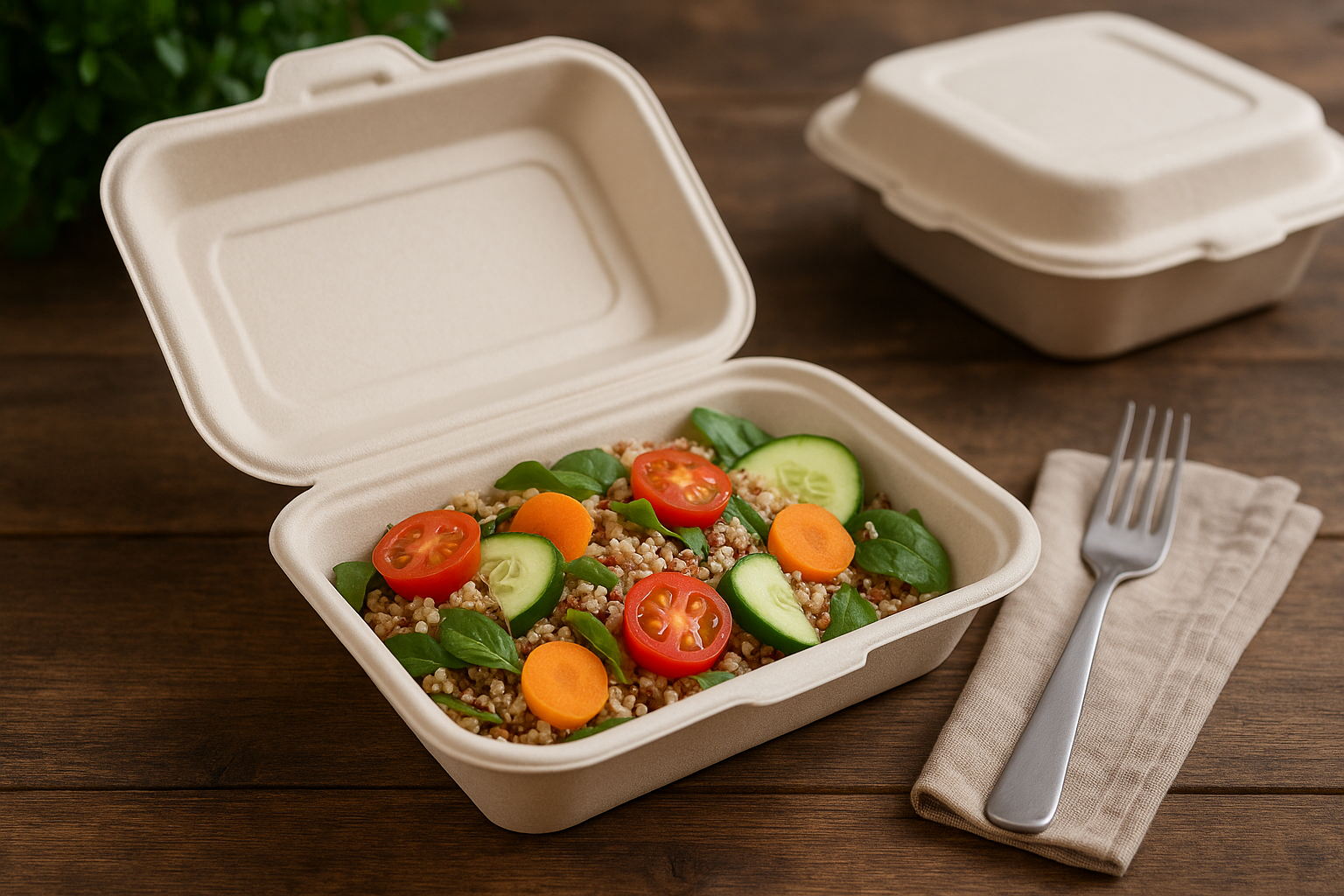
That’s where Bioleader’s sugarcane disposable containers come into play. Made from bagasse, the fibrous residue left after sugarcane processing, these containers are 100% compostable, PFAS-free, and safe for both hot and cold meals.
The Science Behind Bagasse: Nature’s Smart Design
Bagasse is a plant fiber rich in cellulose and lignin—two components that give it strength, durability, and natural resistance to moisture. When molded through high-pressure and heat techniques, it transforms into sturdy, leak-proof food containers without the need for plastic coatings.
A 2024 study published in the Journal of Sustainable Materials revealed that bagasse packaging decomposes 60–90% faster than bioplastics such as PLA, emitting 80% less CO₂ during production. It’s not just eco-friendly—it’s scientifically superior.
Bioleader’s sugarcane bagasse food container line represents this innovation in action. Each item—whether a clamshell, bowl, or tray—is designed to support the demands of modern vegan dining: portion control, heat retention, and zero plastic residue.
Why Vegan Restaurants Are Switching to Bioleader
Across Asia, Europe, and North America, vegan cafés and delivery services are embracing sugarcane-based packaging as the default. Here’s why:
- Compostability: Products degrade completely within 90 days in industrial composting or a few months in home composts.
- Food Safety: Bioleader’s containers meet FDA, LFGB, and BPI certifications for food contact and compostability.
- Temperature Versatility: They withstand up to 120°C for hot meals and as low as -20°C for cold storage.
- Aesthetic Appeal: Minimalist design and natural texture match the visual identity of vegan dining brands.
As one vegan chef in California reported, switching to Bioleader’s bagasse containers reduced their waste output by 70% in less than a year—without increasing packaging costs.
For a closer look at these innovative designs, explore Bioleader’s sugarcane food container range, tailored for global eco-conscious businesses.
Data-Driven Proof: Sustainability by Numbers
According to the OECD Global Plastics Outlook 2025, only 9% of plastics are recycled worldwide, while the rest either land in dumps or oceans. In contrast, natural fiber-based packaging like bagasse fully decomposes back into organic matter.
Bioleader’s internal life-cycle assessment shows that each ton of bagasse packaging saves:
- 1.8 tons of CO₂ emissions compared to plastic
- 4,200 liters of water due to efficient fiber reuse
- 30% less energy through renewable biomass production
These statistics underscore a simple truth: sustainability is measurable, and Bioleader’s data-backed approach ensures its impact is tangible.
Bioleader: From Local Expertise to Global Impact
Headquartered in Xiamen, China, Bioleader has become a trusted OEM/ODM manufacturer serving vegan food brands, organic markets, and restaurant distributors across more than 60 countries.
Their advantages include:
- Certifications: EN13432, ASTM D6400, BPI, TÜV OK Compost, LFGB, and FDA.
- R&D Strength: Dedicated labs for PFAS-free coatings and biodegradable barrier testing.
- Scalable Production: Automated pulp molding lines for high-volume exports.
- Customization: Branding, embossed logos, and tailored packaging solutions for restaurants and eco brands.
Beyond products, Bioleader is committed to education and innovation—partnering with universities and environmental agencies to advance sustainable packaging technologies.
The company’s story isn’t just about manufacturing; it’s about leadership. Its global clients—from vegan cafés in Japan to eco-delivery startups in Germany—describe Bioleader as both a partner and a pioneer.
Real-World Case Study: Vegan Chain Success Story
In 2024, an Indian vegan delivery brand replaced its PET clamshells with Bioleader’s sugarcane bagasse containers. Within six months, the company achieved:
- 62% reduction in packaging waste
- Elimination of microplastic residue in food samples
- Improved customer retention, with “eco packaging” cited as a top satisfaction factor
The transition not only aligned with their sustainability mission but also enhanced their brand image—demonstrating how conscious packaging can directly influence consumer loyalty.
Eco Packaging and the Future of Veganism
The synergy between veganism and sustainable packaging isn’t a coincidence—it’s a natural evolution. As the world’s plant-based food industry continues to grow, the materials used to serve these meals must follow the same ethical and environmental standards.
Bioleader’s approach bridges this gap with sugarcane-based innovation, showing that sustainability and performance can coexist. In a landscape where brands are judged not only by what they make but how they make it, compostable packaging is the silent ambassador of eco integrity.
Frequently Asked Questions
1. What are sugarcane containers made from?
They’re crafted from bagasse—the fibrous residue of sugarcane processing—making them biodegradable and compostable.
2. Are sugarcane food containers safe for hot food?
Yes, they can safely hold hot meals up to 120°C and are microwave- and freezer-safe.
3. How long does it take for bagasse containers to compost?
Typically 60–90 days under industrial composting conditions, depending on temperature and moisture.
4. Are Bioleader’s containers PFAS-free?
Absolutely. Bioleader uses water-based coatings to achieve oil and moisture resistance without harmful chemicals.
5. Why do vegan restaurants prefer sugarcane packaging?
Because it aligns perfectly with plant-based values—renewable, biodegradable, toxin-free, and elegant in design.
Conclusion
In the vegan world, sustainability doesn’t stop at the plate—it extends to the packaging. From sugarcane fields to compost bins, Bioleader’s sugarcane disposable containers tell a story of innovation, responsibility, and environmental renewal.
As more vegan brands adopt compostable packaging, this shift isn’t just a market trend—it’s a moral evolution. And as Bioleader proves, the path to a plastic-free future can start with something as simple—and powerful—as sugarcane fiber.


