
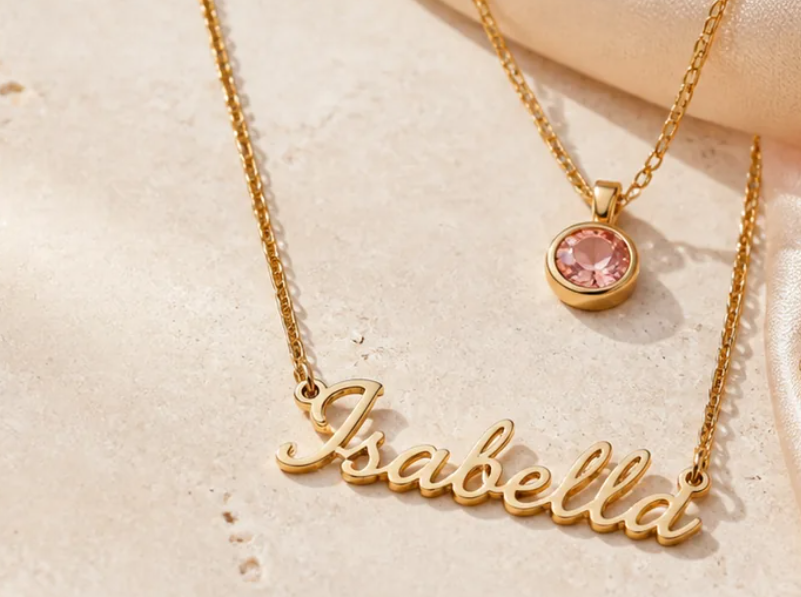
When a grandmother opens a necklace with four stones, she may recognize some of the colors. The story becomes clear when she learns why one stone is in the middle, why two have the same color, or which grandchild chose the design. A few minutes of planning can make it easier for her to read the piece without needing to remember a chart.
Start with the person who will wear the gift. A family piece that marks every birthday still needs to fit her preferences for size, finish, and color. The design decisions below begin with that person and work outward.
Decide which family story you’re celebrating
One piece might represent grandchildren. Another could celebrate two generations of mothers, or a family with several branches. Write down the group in a sentence a recipient could understand on opening the box. Once you know the group, list the people and check their birth months with them or their parents.
If a person’s place in the design carries special meaning, agree on that before deciding the stone order. For a necklace marking a grandmother’s birthday, her stone might sit at the center. A bracelet for someone celebrating a sibling reunion could put each sibling in the order they grew up together. The gift does not have to represent every generation to tell a complete story.
One family might choose a stone for each grandchild. Another could use a single color for each daughter and attach a list of the names in the card. Both approaches give you a clear reason for the number of stones. If several relatives are choosing the gift, have one person keep the final list so the order remains consistent.
Make common birth months part of the design
Use separate settings for individual stones
If twins or cousins share a month, you can give each a stone of the same color. This works well when the design has a readable sequence, such as a horizontal pendant or a group of charms. Use the gift card to show which position belongs to which person.
If separate stones make the piece wider than the wearer likes, consider a smaller setting or fewer elements. Ask the seller for the total dimensions, particularly for an arrangement that uses one prominent stone and several accents. The finished width matters more than the number of stones viewed on a product image.
Use one stone to represent a connection
A shared color can celebrate a birthday month that runs through the family. A grandmother and grandchild with the same month might share a stone on a pendant with two small initials. An engraved note on the reverse can name the people without changing the front.
When you view family birthstone jewelry, think about whether the recipient will want to recognize each person at a glance. A simple line of stones favors a clear sequence. A cluster works well when the meaning is shared.
Choose a style that feels familiar to the wearer
The right piece can sit comfortably beside something she already owns. If she wears delicate necklaces, try a paper mock-up of the proposed pendant beside her usual one. For a bracelet, look at the kind of clasp she likes and how low she wears it on the wrist. A gift with a familiar scale can carry a complicated story without feeling complicated to wear.
Some families add stones over time. Ask whether the design can accommodate that before ordering if more additions are likely. A family birthstone bracelet with individually attached charms may give you room if its construction allows them. A finished ring may be better suited to marking the family at a particular moment. You can also use the same design idea in a second piece later.
Include a simple guide in the card
Draw a small line or a cluster showing how the stones appear from the front. Label them with the names they represent. When stones share a color, identify them by position. You can use a small drawing beside a personal sentence, especially if several people signed the gift.
For example, if four grandchildren give Grandma a pendant, the card might say that the central stone is hers and the others are arranged from oldest to youngest, starting on the left. If the design uses an initial instead of a stone for someone, add that to the same drawing. Check the card against the finished piece before wrapping it.
A color may be the first thing she notices. The card gives the order and arrangement meaning, and the piece becomes easy to explain the next time someone asks about it.
