
Introduction
What is vegan cheese made of? Vegan cheese is made from plant-based ingredients such as cashews, almonds, soy, coconut oil, vegetable oils, and starches. Depending on the recipe, manufacturers also use nutritional yeast, salt, lemon juice, bacterial cultures, and natural thickeners to create a cheese-like taste and texture. Unlike conventional dairy cheese, a genuinely vegan product contains no animal-derived milk, cream, or cheese proteins.
However, not all vegan cheeses contain the same ingredients. Some are made mainly from blended nuts, while others use coconut oil and starch to create slices, blocks, or shredded cheese that softens when heated. Artisan varieties may also be fermented and aged to develop a deeper, tangier flavour.
Understanding what goes into vegan cheese makes it easier to choose a product for your diet, cooking needs, and personal preferences. This guide explains the main ingredients, how they work together, how vegan cheese is made, how it compares with dairy cheese, and what to check on the label before buying it.
What Is Vegan Cheese?
Vegan cheese is a plant-based alternative designed to replace traditional cheese in foods such as sandwiches, pizza, pasta, salads, and snacks. It aims to reproduce some of the flavour, creaminess, firmness, or melting qualities associated with dairy cheese without using animal-derived ingredients.
Traditional cheese is generally made by processing milk, separating curds from whey, and sometimes fermenting and aging the curds. Vegan cheesemaking uses different starting materials, so producers must create the desired texture and flavour using plant ingredients.
For example, soaked cashews can be blended into a creamy base, while coconut oil and starch can create a firmer product suitable for slicing or shredding. Nutritional yeast and acids may provide a savoury, tangy taste, and selected cultures can help develop more complex flavours.
Vegan cheese is available in many forms, including:
- Vegan mozzarella: Often designed for pizza, pasta, and baked dishes.
- Vegan cheddar: Usually sold in slices, blocks, or shreds for everyday meals.
- Vegan cream cheese: A soft, spreadable product for bagels, sandwiches, and dips.
- Vegan Parmesan-style cheese: A firm or grated alternative for pasta and salads.
- Cultured nut cheese: A fermented product that may have a stronger, more complex flavour.
- Vegan cheese sauce: A creamy mixture used in macaroni, nachos, and other dishes.
The exact ingredients depend on the style, recipe, manufacturer, and intended use.
What Is Vegan Cheese Made Of? The Main Ingredients
Most vegan cheese recipes combine a base ingredient with fats, flavourings, and ingredients that help control texture. Some products contain only a few recognizable ingredients, while others use a carefully formulated mixture to produce a consistent result.
1. Cashews
Cashews are one of the most popular ingredients in homemade and artisan vegan cheese. When soaked and blended, they produce a smooth, rich mixture that works well as a dairy-free alternative.
Cashews contain natural fats, some protein, carbohydrates, and minerals. Their mild flavour makes them useful in recipes where the maker wants a creamy base without a strong nutty taste.
Cashew-based cheese is commonly used for:
- Cream cheese-style spreads.
- Soft cheese for crackers and sandwiches.
- Herbed cheese dips.
- Fermented cheese wheels.
- Ricotta-style fillings for pasta.
Cashews can also be combined with nutritional yeast, garlic, lemon juice, salt, and bacterial cultures to create a more savoury flavour.
One important point is that cashew cheese does not automatically melt or stretch like dairy mozzarella. Its behaviour depends on the recipe and any additional ingredients used.
Best for: Creamy spreads, soft cheeses, dips, and cultured artisan-style products.
2. Almonds and Other Nuts
Almonds, macadamias, and other edible nuts can also serve as the foundation of plant-based cheese.
Almonds have a distinct nutty flavour and may be used in blended spreads or firm cheese alternatives. Macadamias are relatively rich in fat and can create a smooth, creamy texture. Other nuts and seeds may be used in specialist recipes.
The choice of nut affects the final product’s taste, richness, colour, and texture. A mild nut can be easier to season with herbs and spices, while a more strongly flavoured nut may give the finished cheese a noticeable character of its own.
Nut-based cheese may be a good option for someone seeking a product made from recognizable food ingredients. However, it is not suitable for everyone, particularly people with allergies to the nuts used.
Best for: Creamy spreads, soft cheese, flavoured cheese wheels, and some aged alternatives.
3. Coconut Oil
Coconut oil is common in many commercial vegan cheese slices and shredded products. Its main purpose is to provide fat and help create a firm texture when the product is cold.
Coconut oil can become solid at cooler temperatures and melt when heated. This behaviour helps manufacturers develop cheese alternatives that hold their shape in the refrigerator and soften in hot foods.
Coconut oil does not naturally taste like cheddar or mozzarella. Therefore, it is usually combined with other ingredients that provide savoury flavour, acidity, colour, and structure.
It is important to distinguish coconut oil from coconut milk. Coconut oil supplies concentrated fat, while coconut milk contains water and fat in varying proportions.
Coconut oil can also be high in saturated fat. If you are comparing products for everyday consumption, check the nutrition label rather than assuming that a plant-based product is automatically low in saturated fat.
Best for: Commercial slices, shreds, blocks, and products designed to soften when heated.
4. Soy Milk, Tofu, and Soy Protein
Soybeans provide another useful foundation for vegan cheese. Manufacturers may use soy milk, tofu, or soy protein, depending on the product they want to make.
Tofu is made by coagulating soy milk, so it already has a soft, curd-like structure. When blended with seasonings, acids, and fats, it can be used to prepare creamy spreads and cheese-style fillings.
Soy protein can also contribute structure and protein to formulated products. The finished nutritional profile depends on how much soy is used and which other ingredients are added.
Soy-based cheese can be useful for people who want a plant-based alternative that contributes protein. Nevertheless, the protein content of one product should not be assumed to match that of another.
People with soy allergies should check ingredient lists carefully.
Best for: Creamy cheese alternatives, soft fillings, and some protein-containing formulations.
5. Oats, Peas, and Other Plant Ingredients
Not every vegan cheese relies on nuts, soy, or coconut oil. Some products use oat ingredients, pea protein, sunflower seeds, or other plant-based materials.
Pea protein can contribute structure and protein. Oat ingredients may provide bulk and a mild flavour. Sunflower seeds can be blended into a creamy base and may be useful in nut-free recipes.
These ingredients are often combined with oils, starches, flavourings, or stabilizers to achieve the desired consistency.
For example, a manufacturer might use pea protein to improve the structure of a product while adding vegetable oil for richness and starch for firmness.
The presence of a plant ingredient does not guarantee that the finished cheese is allergen-free. Always check the complete ingredient list and any relevant allergy statements.
Best for: Alternative formulations, selected nut-free recipes, and products designed around particular dietary preferences.
6. Tapioca Starch
Tapioca starch comes from cassava root. It is used in many recipes because heating it with liquid causes it to thicken and form a sticky, elastic texture.
This property is especially useful when making mozzarella-style cheese for pizza or other hot dishes. Tapioca starch can help a mixture become stretchy or gooey, although the final result depends on the proportions of starch, water, fat, and other ingredients.
Tapioca starch is different from tapioca flour in some commercial labelling systems, although the terms are sometimes used interchangeably. The specific product and recipe determine how it performs.
Tapioca starch is naturally gluten-free, but anyone with coeliac disease or gluten sensitivity should still check the finished product’s label for other ingredients and possible cross-contact.
Best for: Stretchy cheese sauces, mozzarella-style alternatives, and soft, elastic textures.
7. Potato, Corn, and Modified Starches
Potato starch, corn starch, and modified food starches are used to thicken mixtures and help them hold their shape.
When heated in the presence of liquid, many starches absorb water and swell. This process creates a thicker structure that can become firm as the product cools.
Manufacturers choose starches according to the texture they want. One formulation might produce a smooth cheese sauce, while another creates a block that can be sliced or shredded.
Modified starch does not necessarily mean that a product contains an unsafe ingredient. It refers to starch that has been treated physically, enzymatically, or chemically to change its functional properties for food production.
Starches are mainly functional ingredients. They do not automatically provide the protein, calcium, or other nutritional characteristics associated with dairy cheese.
Best for: Firm blocks, slices, sauces, shreds, and consistent commercial textures.
8. Nutritional Yeast
Nutritional yeast is an inactive yeast sold as flakes or powder. It has a savoury, nutty, slightly cheesy flavour that makes it popular in plant-based cooking.
It is different from ordinary baking yeast because it does not make bread rise. Instead, it is used to add flavour and, depending on the product, nutrients.
In vegan cheese recipes, nutritional yeast can help create a deeper savoury taste. It is often combined with salt, garlic powder, onion powder, mustard, lemon juice, or other seasonings.
Some nutritional yeast products are fortified with vitamins, including vitamin B12. Others are not fortified, so the label matters if you are relying on the ingredient for a particular nutrient.
Nutritional yeast alone does not turn a mixture into a sliceable cheese. It mainly contributes flavour, while other ingredients supply structure and texture.
Best for: Cheddar-style flavour, homemade cheese sauces, spreads, and grated cheese alternatives.
9. Lemon Juice, Vinegar, and Food Acids
Acidity is important because many familiar cheeses have a slightly sour or tangy taste.
Home recipes commonly use lemon juice or apple cider vinegar. Commercial products may use citric acid or lactic acid, depending on the formulation.
These ingredients help balance the richness of fats and nuts. They can also make a mild plant-based mixture taste sharper and more cheese-like.
Lactic acid is not automatically derived from dairy milk. Food-grade lactic acid can be produced through fermentation of plant-derived sugars. However, anyone following a strict vegan diet who is uncertain about an ingredient or manufacturing process can contact the manufacturer.
Acid also affects the overall flavour balance. Too much can make a cheese alternative unpleasantly sour, while too little may leave it tasting bland.
Best for: Tangy cream cheese, cheddar-style spreads, and recipes that need a brighter flavour.
10. Salt, Herbs, and Spices
Salt is one of the simplest but most important ingredients in vegan cheese. It enhances flavour and helps balance the taste of fats, starches, nuts, and acids.
Other flavourings may include:
- Garlic and onion powder.
- Black pepper.
- Paprika.
- Mustard.
- Chives and other herbs.
- Smoked paprika or other smoky flavourings.
- Yeast extract.
- Miso paste.
These ingredients can create different styles without changing the basic plant-based foundation.
For example, garlic and chives work well in a spread, while smoked paprika can add a deeper flavour to a cheddar-style block. Miso can contribute savoury complexity, although it may also increase the product’s sodium content.
Best for: Improving flavour and creating distinctive varieties.
11. Agar-Agar, Carrageenan, and Xanthan Gum
Some vegan cheeses need additional ingredients to keep them firm, smooth, or stable.
Agar-agar is a setting agent obtained from certain seaweeds. It can help a liquid mixture become firm as it cools. It is used in some homemade cheese recipes and other plant-based foods.
Carrageenan is another seaweed-derived ingredient used in certain formulations to improve thickness or stability. Xanthan gum is a thickening and stabilizing agent that can help prevent ingredients from separating.
These ingredients are not interchangeable in every recipe. They behave differently depending on temperature, concentration, acidity, and the other ingredients present.
Agar-agar, for instance, can create a firm gel, but it does not necessarily produce the same stretch as a carefully formulated mozzarella-style product.
Best for: Controlling firmness, preventing separation, and creating a stable texture.
12. Bacterial Cultures and Fermentation Ingredients
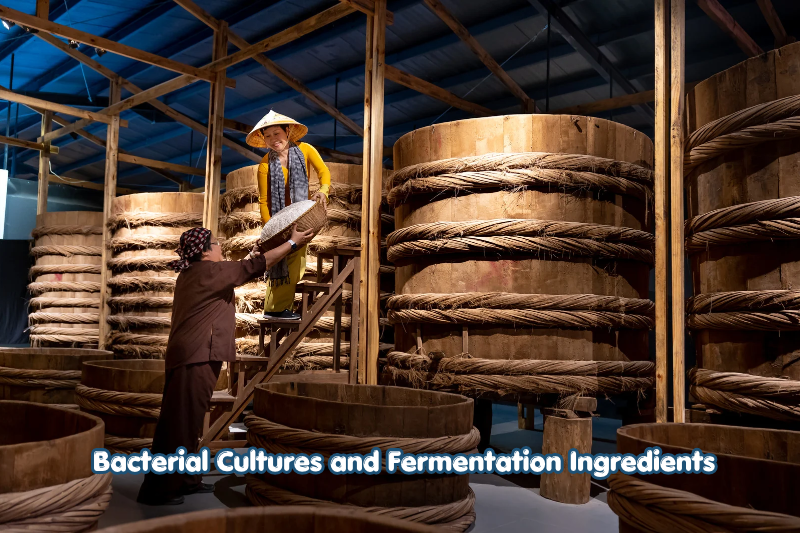
Some vegan cheeses are cultured in a process that develops flavour over time. Producers may introduce selected microorganisms to a nut-based or other plant-based mixture.
During fermentation, microorganisms transform certain compounds in the mixture and can create acids and other flavour compounds. This may produce a more complex, tangy taste than a simple mixture of starch, oil, and seasonings.
Some cultured cheeses are also aged under controlled conditions. Aging can change the flavour, texture, and aroma, although the exact results depend on the recipe and production method.
Not every vegan cheese is fermented. Many supermarket slices and shreds are made through blending, heating, setting, and cooling without a traditional aging process.
Best for: Cultured cashew cheeses, artisan-style products, and varieties with more complex flavours.
How Is Vegan Cheese Made?
The production method depends on whether the product is a quick cheese alternative, a commercial melting cheese, or a cultured and aged product.
Method 1: Blending and Setting
This method is common in homemade recipes.
- Choose the base: Select soaked cashews, tofu, or another suitable plant ingredient.
- Blend the ingredients: Add water or plant milk, seasonings, and any required fats.
- Adjust the flavour: Use lemon juice, vinegar, nutritional yeast, and salt as appropriate.
- Add a setting ingredient: Depending on the recipe, use a suitable thickener or setting agent.
- Heat if required: Some starches and setting agents need heating to work correctly.
- Pour into a container: Transfer the mixture into a suitable mould or storage container.
- Cool and refrigerate: Allow it to firm up according to the recipe.
The result may resemble a soft spread or a firm cheese-style block. The texture will depend on the ingredients and proportions.
Method 2: Commercial Starch-and-Oil Production
Many commercial slices and shreds use a formulation built around water, vegetable fat, starch, and flavouring ingredients.
The ingredients are mixed and processed so the fat, liquid, and starch form a consistent product. Heating activates the starch and helps develop the desired texture. The mixture is then shaped, cooled, and packaged.
Different manufacturers use different recipes and equipment, so the process is not identical for every brand.
This approach can produce uniform slices and shreds suitable for sandwiches, burgers, pizza, and baked dishes.
Method 3: Culturing and Aging
Artisan producers may begin with cashews or other plant-based ingredients, prepare a smooth base, introduce suitable cultures, and allow the mixture to ferment under controlled conditions.
The product may then be shaped and aged. During this period, the flavour can become sharper and more complex.
Culturing and aging require appropriate food-safety controls. Homemade mixtures should not be left at room temperature for an arbitrary period or aged using unverified instructions.
This method can create a more distinctive cheese-like flavour, but it does not guarantee that the finished product will melt like dairy cheese.
What Makes Vegan Cheese Melt and Stretch?
One of the most common questions about plant-based cheese is why some varieties melt well while others stay firm.
Traditional dairy cheese contains casein proteins that contribute to its structure and melting behaviour. Most conventional vegan cheese alternatives do not contain dairy casein, so their manufacturers use other ingredients to create similar qualities.
Three factors are especially important.
Fat Content
Fats help create richness and a soft mouthfeel. Coconut oil is useful in some formulations because it changes from a firmer state to a liquid as it warms.
However, fat alone cannot guarantee good melting. The other ingredients and the structure of the mixture also matter.
Starch and Water
Starch absorbs water and forms a gel when heated. Depending on the type and amount of starch, this can help a product soften, become gooey, or stretch.
Too much starch or the wrong formulation may produce a thick or rubbery result instead of the desired melt.
Protein and Stabilizers
Plant proteins, gums, and other stabilizing ingredients can help a product hold together. Their effects depend on the specific formulation.
A useful shopping tip is to choose a product made specifically for your intended dish. A soft cashew spread may be excellent on crackers but unsuitable for creating stretchy pizza topping.
Does Vegan Cheese Taste Like Dairy Cheese?
Vegan cheese can taste similar to dairy cheese, but the experience varies significantly between products.
Cashew-based cheese often has a creamy, mildly nutty flavour. Coconut-oil-and-starch products may have a mild base flavour that relies on seasonings and acids to create a cheddar- or mozzarella-style taste. Cultured nut cheese can have a tangier, more developed flavour.
Some products are designed to imitate familiar dairy varieties closely. Others have their own distinct flavour and are not intended to be exact copies.
Texture also influences taste. A creamy spread, a firm slice, and a stretchy pizza topping create different eating experiences even when they share similar seasonings.
If you are trying vegan cheese for the first time, consider starting with a product made for a food you already enjoy. For example, try a melting variety on pizza or a flavoured cashew spread with crackers.
Is Vegan Cheese Healthy?
Vegan cheese can fit into different eating patterns, but its nutritional value depends on the ingredients and serving size. The word “vegan” describes the absence of animal-derived ingredients; it does not automatically mean a product is low in calories, fat, or sodium.
Protein
Some nut-based vegan cheeses contain modest amounts of protein, while products made mainly from oil and starch may contain very little. Soy- or pea-protein-based products may offer more.
If protein intake is a priority, check the nutrition panel and compare the amount per serving rather than relying on the product name.
Saturated Fat
Coconut oil can contribute substantial saturated fat to some vegan cheese products. Other recipes may use different fats or have a different overall fat content.
Compare the saturated fat listed on the label, particularly if you eat cheese alternatives frequently.
Sodium
Salt helps give vegan cheese its characteristic flavour. Some products contain considerable sodium, so compare labels if you need to monitor your intake.
Calcium and Vitamin B12
Dairy cheese can provide calcium and protein, but many plant-based cheese alternatives do not naturally provide equivalent amounts.
Some manufacturers fortify their products with calcium, vitamin B12, or other nutrients. Fortification varies by brand, so check the nutrition panel instead of assuming these nutrients are present.
Is Homemade Vegan Cheese Healthier?
Homemade vegan cheese gives you more control over the ingredients. You can choose the amount of salt, select a nut or seed base, and avoid ingredients you prefer not to use.
However, homemade cheese is not automatically more nutritious. A recipe based heavily on coconut oil can still be high in saturated fat, while a nut-based recipe may contain more calories than expected.
The most useful approach is to choose a product that suits your dietary needs and to consider the whole diet rather than judging food by one ingredient alone.
Vegan Cheese vs. Dairy Cheese
Although both products can be used in similar meals, their ingredients and nutritional properties may differ.
| Feature | Vegan Cheese | Dairy Cheese |
|---|---|---|
| Main base | Nuts, oils, soy, starches, or other plant ingredients | Animal milk |
| Dairy protein | Usually absent in genuine vegan alternatives | Commonly contains casein and whey proteins |
| Lactose | Generally absent if no dairy-derived ingredients are present | Varies by cheese type |
| Protein | Varies; often lower in oil-and-starch products | Often a substantial source |
| Saturated fat | Depends on the oils and other ingredients | Depends on the type of dairy cheese |
| Melting | Depends on formulation | Depends on cheese type, moisture, and processing |
| Calcium and B12 | May be added through fortification | Content varies by product |
| Vegan suitability | Suitable when ingredients and processing meet vegan requirements | Not vegan |
Neither category has a single nutritional profile. Always compare individual products when making dietary decisions.
How to Choose the Best Vegan Cheese
The best product is the one that matches your cooking needs, dietary preferences, and taste.
For Pizza and Baked Dishes
Look for vegan mozzarella or a product specifically labelled for melting. Tapioca or potato starch and suitable fat blends may help create a softer, stretchier texture.
Follow the manufacturer’s cooking directions because some varieties need more heat or time than dairy mozzarella.
For Sandwiches and Burgers
Sliced vegan cheddar-style products are convenient for everyday meals. Check whether the slices are designed to melt, since some remain relatively firm when heated.
For Pasta and Cheese Sauce
Nutritional yeast, plant milk, and suitable starches can create a creamy, savoury sauce. A grated Parmesan-style alternative may be more convenient when you want a finishing ingredient.
For Crackers and Cheeseboards
Cashew-based spreads and cultured nut cheeses can provide a creamy texture and more developed flavour. If you have a nut allergy, choose a verified alternative made without the relevant allergen.
For a Short Ingredient List
Read the ingredient list and identify the main base. A shorter list may be preferable if you want a simple formulation, but the number of ingredients alone does not establish nutritional quality or safety.
How to Read a Vegan Cheese Label
A quick label check can help you understand what you are buying.
Step 1: Check the first ingredients. Ingredients are generally listed in descending order by weight under many food-labelling systems. The first few items can reveal whether the product relies mainly on nuts, oils, starch, or another base.
Step 2: Review the nutrition panel. Check protein, saturated fat, sodium, calories, and any nutrients that matter to you.
Step 3: Check allergens. Look for nuts, soy, and any other ingredients you need to avoid. Check cross-contact warnings when relevant.
Step 4: Confirm that it is genuinely vegan. Review the ingredients for milk, whey, casein, or other animal-derived components. Do not rely only on a product’s appearance or cheese-style name.
Step 5: Check the intended use. A spreadable product may not work well on pizza, while a firm block may not blend smoothly into a sauce.
Step 6: Follow storage instructions. Refrigerate products as directed and respect the use-by date, particularly after opening.
These checks are more reliable than assuming that every product labelled dairy-free, plant-based, or cheese-style has identical ingredients.
How to Make Simple Vegan Cheese at Home
If you want to try homemade vegan cheese, a cashew-based spread is a straightforward starting point. It does not require traditional dairy cheesemaking equipment.
Ingredients
- 1 cup raw cashews.
- 2–3 tablespoons water, adding more as needed.
- 2 tablespoons nutritional yeast.
- 1–2 tablespoons lemon juice.
- 1 small garlic clove or a small pinch of garlic powder.
- Salt to taste.
Instructions
- Soak the cashews in water until softened, then drain them.
- Add the cashews, nutritional yeast, lemon juice, garlic, salt, and a small amount of fresh water to a blender.
- Blend until the mixture becomes smooth and creamy.
- Add water gradually if the mixture is too thick.
- Taste and adjust the salt, acidity, and seasonings.
- Transfer the spread to a clean container and refrigerate promptly.
This recipe makes a soft, savoury cheese-style spread. It is not designed to produce a firm block or stretchy mozzarella.
Keep it refrigerated and use it promptly, following safe food-handling practices. Because the recipe contains no validated preservation process, do not assume that it will keep as long as a commercially packaged product.
For a firmer cheese, you would need a different formulation and a suitable setting ingredient. A recipe intended for agar-agar or starch must be followed carefully because ingredient proportions and heating methods affect the final texture.
Common Myths About Vegan Cheese
Myth 1: All Vegan Cheese Is Made From Coconut
Coconut oil is common in many commercial products, but vegan cheese can also be made from cashews, almonds, soy, seeds, oats, and other plant ingredients.
Myth 2: Vegan Cheese Is Always Healthy
Plant-based products can contain saturated fat, sodium, and relatively little protein. Their nutritional value depends on the actual ingredients and serving size.
Myth 3: Every Vegan Cheese Melts Like Mozzarella
Some products melt or stretch well, while others soften, thicken, or remain firm. Choose a variety designed for your intended recipe.
Myth 4: All Vegan Cheese Is Nut-Free
Many artisan and homemade varieties contain cashews or other nuts. Read the label carefully if you have a nut allergy.
Myth 5: Vegan Cheese Must Be Fermented
Some vegan cheeses are fermented and aged, while others are produced by mixing, heating, setting, and cooling plant ingredients. Fermentation is not required for every style.
Frequently Asked Questions
1. What is vegan cheese made of?
Vegan cheese is made from plant-based ingredients such as cashews, almonds, soy, coconut oil, vegetable oils, and starches. Depending on the recipe, it may also contain nutritional yeast, salt, acids, bacterial cultures, and stabilizers. The exact combination depends on whether the product is designed to be creamy, firm, sliceable, or stretchy when heated.
2. Is vegan cheese made from real cheese?
Traditional vegan cheese alternatives are not made from conventional dairy cheese. They use plant ingredients to reproduce some of the flavour and texture of dairy products. However, some newer products use precision-fermented dairy proteins, which may be animal-free in production but are not necessarily vegan because the protein can still be a dairy allergen. Always check the specific product’s ingredients and claims.
3. Does vegan cheese contain milk?
Genuinely vegan cheese contains no animal-derived milk or dairy ingredients. However, people with milk allergies should still read ingredient labels and relevant manufacturing warnings carefully. A product described as lactose-free is not necessarily vegan, because it may still contain dairy proteins.
4. Is vegan cheese healthier than regular cheese?
Neither type is universally healthier. Vegan cheese made mainly from oils and starches may contain less protein than dairy cheese, while some varieties contain substantial saturated fat or sodium. Fortified products may supply selected nutrients. Compare the nutrition information, serving size, and ingredients to determine which option best fits your needs.
5. What gives vegan cheese its cheesy flavour?
Nutritional yeast, salt, garlic, onion, lemon juice, vinegar, and selected flavourings can create a savoury, tangy taste. Cultured varieties may develop additional flavour through fermentation and aging. The final result depends on the recipe, so some products taste closer to familiar dairy cheese than others.
6. Why does vegan cheese sometimes fail to melt?
Vegan cheese does not necessarily contain the casein protein responsible for many of dairy cheese’s melting properties. Manufacturers use fats, starches, proteins, and stabilizers to create a suitable texture, but these ingredients behave differently. A cheese designed for crackers may remain firm on pizza, so choose a melting variety for hot dishes.
7. Is vegan cheese gluten-free?
Many common vegan cheese ingredients, including cashews, coconut oil, and tapioca starch, are naturally gluten-free. Nevertheless, the finished product may contain other ingredients or be exposed to cross-contact during manufacturing. Check the packaging and look for an appropriate gluten-free claim if you need to avoid gluten strictly.
8. Can people with nut allergies eat vegan cheese?
Some vegan cheeses are made with soy, pea protein, coconut oil, or other ingredients instead of tree nuts. However, the category includes many cashew- and almond-based products, so not every variety is suitable for people with nut allergies. Check ingredient and cross-contact statements and seek professional allergy guidance when necessary.
9. Does vegan cheese contain protein?
Some vegan cheeses contain protein from nuts, soy, peas, or other plant ingredients. Products based mainly on oils and starches may provide very little. The amount varies by recipe and brand, so check the nutrition panel if you use cheese as a regular protein source.
10. How should vegan cheese be stored?
Follow the storage instructions on the package. Most refrigerated vegan cheese should be kept cold, sealed appropriately after opening, and used within the manufacturer’s recommended period. Homemade varieties may have a shorter storage life because they do not use the same validated preservation and packaging processes as commercial products.
11. Can vegan cheese be used on pizza?
Yes. Vegan mozzarella-style shreds and other products designed for melting can be used on pizza. However, melting, browning, and stretching differ by formulation. Follow the cooking instructions and avoid assuming that every dairy-free block will behave like conventional mozzarella.
12. Is nutritional yeast the same as baking yeast?
No. Nutritional yeast is inactive yeast used mainly for its savoury flavour. Baking yeast is a living leavening organism used to help dough rise. Nutritional yeast can contribute a cheese-like flavour to plant-based recipes, but it does not provide the same structural properties as fats, starches, or setting agents.
Conclusion
Vegan cheese is made from a variety of plant-based ingredients, and the exact recipe depends on the type of product. Cashews and other nuts provide creamy bases, coconut oil supplies richness and structure, and soy or pea protein can contribute additional protein. Starches help create firmness and elasticity, while nutritional yeast, acids, salt, and seasonings develop the flavour.
Some products are made by blending and setting ingredients, while others undergo fermentation and aging to develop a more complex taste. These different methods explain why vegan cheeses vary in texture, nutrition, and melting performance.
When choosing a product, consider how you plan to use it, review the ingredients, compare the nutrition label, and check for allergens. A little label-reading can help you find an alternative that suits your preferences without assuming that all vegan cheeses are the same.
Understanding what vegan cheese is made of allows you to make more informed choices, whether you are buying a supermarket product, preparing a homemade spread, or exploring different plant-based foods.
