
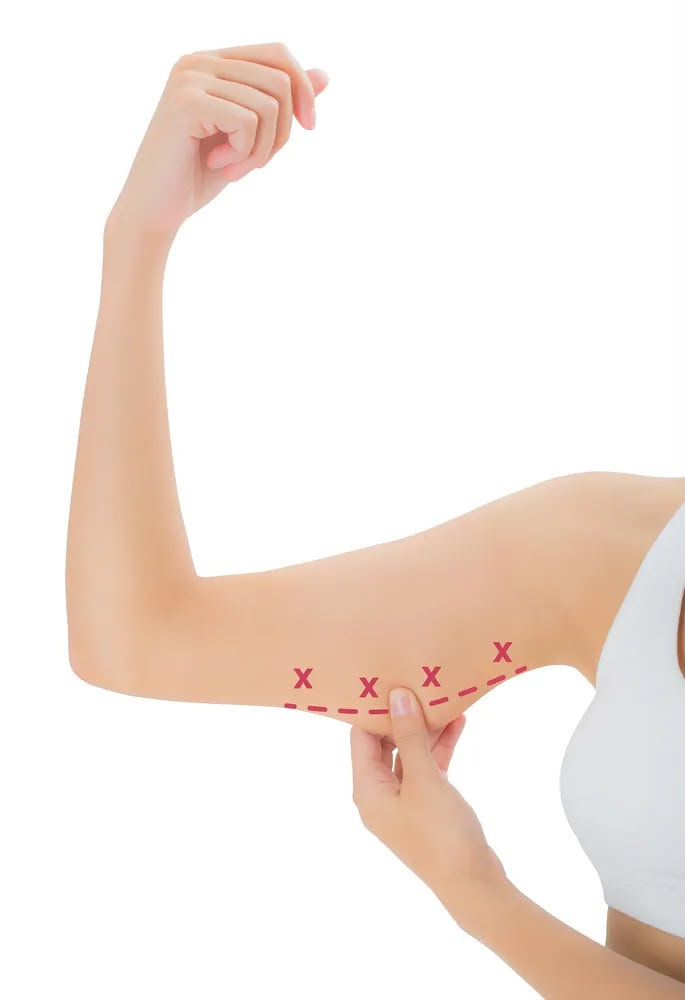
Upper-arm contour can change after weight fluctuations, ageing or changes in skin elasticity. Some people are mainly concerned about a localised pocket of fat, while others have loose skin that hangs from the underside of the arm. These concerns may look similar, but they are not treated in the same way.
For patients considering arm liposuction Malaysia, the important question is whether excess fat is the main issue and whether the surrounding skin can adapt after fat removal. When skin laxity is more significant, removing fat alone may not produce the smoother contour a patient expects.
What Arm Liposuction Is Designed to Do
Liposuction removes selected deposits of subcutaneous fat through small incisions using a cannula. In the upper arms, it may be considered when fullness is caused mainly by fat and the skin still has reasonable firmness and elasticity.
The American Society of Plastic Surgeons notes that liposuction candidates generally benefit from firm, elastic skin and good muscle tone. The procedure is intended for body contouring rather than as a treatment for obesity or a replacement for weight management.
Liposuction can reduce volume, but it does not directly remove substantial loose skin.
Skin Elasticity Changes the Result
After fat is removed, the skin needs to settle around the new arm contour. How well it does so varies from person to person. Age, genetics, previous weight changes and the degree of existing laxity can all influence the result. Someone with good skin elasticity may see a smoother contour after fat reduction, while another patient may be left with noticeable loose skin.
A physical examination therefore matters because it allows the surgeon to assess both the amount of fat and the quality of the skin.
When Brachioplasty Becomes More Relevant
Patients researching brachioplasty Malaysia are usually dealing with a different problem: significant loose or hanging upper-arm skin.
Brachioplasty, also called an arm lift, removes excess skin and reshapes the underside of the upper arm. Depending on the patient, selected fat may also be removed. ASPS guidance describes arm lift surgery as appropriate for adults with significant upper-arm skin laxity and relatively stable weight.
The key difference is straightforward: liposuction primarily reduces fat, while brachioplasty is designed to address excess skin as well as contour.
The Scar Is an Important Trade-Off
An arm lift can create a larger change when skin laxity is substantial, but it requires a longer incision. The scar may extend along the inside or back of the upper arm, with length depending on how much skin needs to be removed. More limited incisions may be possible in selected cases, but they are not suitable for everyone.
Patients should discuss scar placement before surgery and understand that scars generally mature over time but do not disappear completely.
Can Liposuction and Arm Lift Surgery Be Combined?
Some patients have both excess fat and loose skin. In these cases, liposuction may sometimes be used together with brachioplasty to improve contour. Combining techniques does not mean every patient needs both. A person with good skin quality and localised fat may require only liposuction, while someone with little excess fat but considerable skin laxity may benefit more from skin removal.
The treatment plan should match the tissues causing the concern rather than automatically combining procedures.
Stable Weight Matters Before Surgery
Both procedures are generally easier to plan when body weight is relatively stable. Further major weight loss can create additional loose skin, while substantial weight gain may alter the contour again. Patients who have recently lost a large amount of weight may be advised to allow their weight to stabilise before surgery.
medical conditions and medications can also affect healing and should be discussed during consultation.
Understand the Risks and Recovery
Arm liposuction and brachioplasty are surgical procedures and carry potential complications. Possible risks include bleeding, infection, fluid accumulation, changes in sensation, asymmetry, contour irregularities, poor wound healing and scarring. Arm lift surgery involves a larger wound, so scar quality and wound care become particularly important.
Recovery varies according to the extent of treatment. Patients should follow advice about compression, activity restrictions, wound care and when to resume exercise.
Conclusion
Arm liposuction and brachioplasty can both improve upper-arm contour, but they solve different problems. Liposuction is primarily intended to reduce localised fat when skin quality is suitable, while brachioplasty removes significant loose skin and can reshape the arm more extensively.
The most useful decision starts with identifying whether fat, skin laxity or both are creating the concern. A qualified plastic surgeon can assess skin elasticity, fat distribution, general health and expected scars, then explain which approach is proportionate to the patient’s anatomy and goals.
