
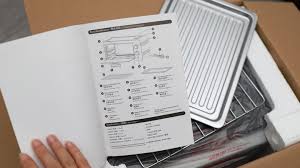
Most households treat appliance manuals the same way they treat insurance paperwork — something important enough to keep but not important enough to organize. The result is a drawer or folder somewhere with a thick stack of booklets, half of which are for products no longer in the house, and the other half missing entirely when they are finally needed. This is a solvable problem, and solving it takes surprisingly little time once you commit to doing it. A well-organized digital library of every user manual in your home costs nothing, takes an hour or two to set up, and saves meaningful time across the lifetime of the appliances it covers. More importantly, it removes one of the most common sources of minor household friction — the moment when a small problem cannot be solved because the documentation needed to solve it is not available. This article makes the case for building that library and explains how to do it without over-engineering the project.
The Real Cost of a Missing Manual
The cost of a missing manual is almost never catastrophic, but it adds up. A washing machine error code that could have been cleared in two minutes instead becomes a service call. A programmable thermostat stays at its default settings for three years because the steps to customize it are locked in a booklet that is not in the house anymore. A new oven’s specialized baking modes never get used because nobody wants to experiment without guidance. Each of these small moments costs time, money, or both. A household that has a complete digital manual library does not experience them. The error code gets resolved with a quick search. The thermostat gets programmed on a Saturday afternoon. The oven’s full capability gets used from week one. The value is not dramatic, but it is constant and compounding across every appliance in the home.
Why Digital Beats Paper for This Specific Purpose
Paper manuals have one real advantage: they are in the room with the appliance. Everything else favors digital. Digital manuals are searchable, which means finding a specific error code or procedure takes seconds instead of minutes of page-flipping. Digital files are backed up, which means they survive floods, fires, and the migratory habits of paper during household moves. Digital manuals can be accessed from a phone standing in front of the appliance, which is exactly where the information is most useful. And digital manuals can be shared easily — with a service technician, with a family member who is troubleshooting remotely, with a new homeowner who has just bought your house. For a document whose sole purpose is to be consulted when something needs doing, digital is simply the better format.
Building the Library: Start With What You Have
The easiest way to start is to walk through your home and make a simple inventory of every appliance and piece of equipment that has a manual. Kitchen, laundry, garage, yard, bathroom, office — each room typically has more devices than people initially think. Washing machines and dishwashers, obviously, but also coffee makers, microwaves, printers, routers, thermostats, smoke detectors, ceiling fans, garage door openers, lawnmowers, power tools, and sometimes furniture with hardware (standing desks, adjustable beds). Write down the brand and model number for each one. An hour of this inventory work produces a list that becomes the foundation for everything else.
Where to Find the Digital Manuals
For each item on the list, start with the manufacturer’s support page. If the document is there, download the PDF and move on. If the manufacturer does not have it, search a dedicated manual archive like manualmachine.com, which covers tens of thousands of models from manufacturers across every major category. Most households find that between the manufacturer site and one good archive, they can locate documentation for ninety-five percent of their inventory. The remaining five percent — typically very old or obscure items — can be handled through community forums, owner groups, or by scanning whatever paper copy is still in the drawer and adding it to the digital collection.
Naming and Organizing the Files
The single decision that determines whether the library actually works in practice is the file naming convention. The worst approach is to let files download with whatever name the source site gives them — userguide_v3_final.pdf will not be findable in three years. The best approach is consistent, descriptive naming: brand, model, product type, separated by underscores or hyphens. For example, Bosch_WAW28500UC_washing_machine.pdf, or LG_LM40R_microwave.pdf. This convention lets you find any manual by typing a partial filename into your file search, which is faster than navigating a folder tree. Group the files in a single top-level folder called Manuals, with subfolders by room or category if your collection grows beyond thirty or forty items.
Where to Store the Library
Cloud storage is the right answer for this specific use case. Google Drive, Dropbox, iCloud, and OneDrive all work equally well. Local-only storage on a single computer is risky because hardware fails and files get lost. Cloud storage means the library survives any single device failure and is accessible from a phone, which is where it is most useful — standing in front of the malfunctioning appliance. The total size of a complete household manual library is usually under five hundred megabytes, well within the free tier of every major cloud service. There is no budget argument against doing this.
Maintaining the Library Over Time
The library should be updated whenever a new appliance enters the home. Make it a habit: when you unbox something with a manual, find the digital version, save it to the library, and dispose of the paper. When an appliance leaves the home — sold, broken beyond repair, replaced — delete its manual from the library or move it to an archive folder. A household that follows this discipline finds that after two or three years, the library is genuinely complete and genuinely useful. The one-time setup cost is small, the ongoing maintenance is minimal, and the payoff is years of never being stuck on the wrong side of a missing document again.


